Looking back at the search for noble gas compounds, chemists for years figured xenon wouldn't react with much. For most of history, the story sounded simple: xenon is noble, rare, and totally uninterested in bonding. The plot changed quickly in the early 1960s, following the work of Neil Bartlett, who cracked krypton and xenon open to the possibility of chemistry. It didn't take long for researchers to find that these “noble” elements could form stable compounds in a lab, and xenon difluoride really caught people’s attention. Scientists first isolated XeF2 in 1962, and it became the prototype for a whole series of xenon fluorides. Back then, the existence of XeF2 was a solid blow to the old dogma that noble gases stay inert. Few discoveries have changed chemistry textbooks so deeply.
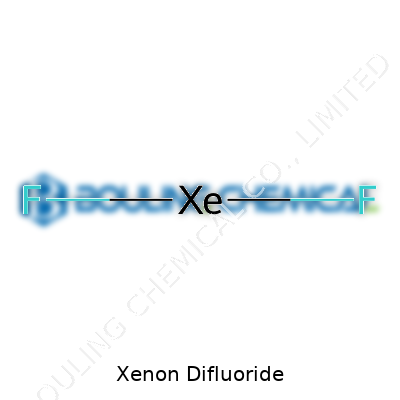
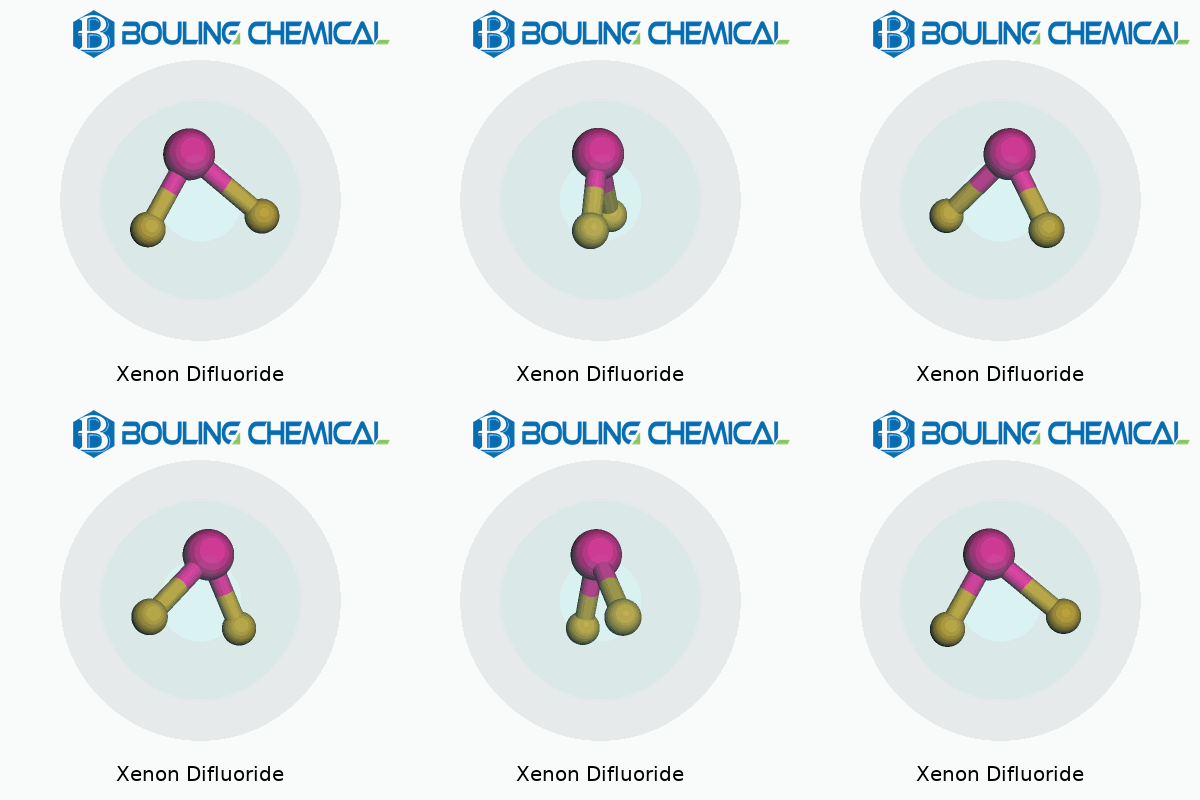
Xenon difluoride sits as a logical step forward in noble gas chemistry. Structurally, it is a simple binary fluoride, with a xenon atom bonded to two fluorine atoms. It looks unassuming to the naked eye—a stark white crystalline solid at room temperature. In laboratories where it stays away from water and light, XeF2 turns into a precise tool, particularly as a selective fluorinating agent. Chemists possibly appreciate it for how controllable and surprisingly gentle it acts, compared to more aggressive fluorine sources.
My first encounter with xenon difluoride came with a warning: don’t breathe in the dust, and keep it dry. Its crystals show minimal odor or volatility at room temperature, but they evaporate as you heat them. Under moderate warmth, XeF2 sublimes directly into vapor. In handling, the material shows sensitivity to moisture, reacting in air to give up hydrofluoric acid—a health hazard of its own. Chemically, XeF2 packs an unusually strong wallop as an oxidizing and fluorinating agent, releasing energy and sometimes violent reactivity with simple substances such as water, hydrogen, or many metals.
Those of us pulling XeF2 bottles off the reagent shelf pay attention to purity standards. Specialists typically want a substance above 99% grade, sometimes checked by gas chromatography or mass spectrometry. Strict labeling requirements exist because of its toxicity and reactivity, enforcing pictograms for oxidizer and acute toxicity risks. Storage calls for inert glass containers, and even shipping requires special paperwork under hazardous goods regulations. Every hand that touches these bottles needs training in both the hazards of fluorine chemistry and the specific quirks of xenon compounds.
Researchers usually limit themselves to well-worn synthesis tracks for safety’s sake. Xenon difluoride springs to life when xenon and fluorine gases react together, classically in sealed nickel tubes or stainless steel containers under a few atmospheres of pressure. The reaction can go at room temperature, but heating accelerates the process. Avoiding impurities is critical, as contamination easily puts handlers in danger or simply causes the xenon to escape back to gas form rather than forming XeF2. Once formed, the crystals get separated by cooling and gentle sublimation, which works well for small batches.
In the hands of a skilled chemist, XeF2 performs subtle chemical tricks. One of its most valuable properties: selective fluorination of organic and inorganic compounds, replacing hydrogens or other atoms with fluorine. Its milder touch lets it work on sensitive molecules that raw fluorine gas would destroy instantly. In semiconductor fabrication, XeF2 etches away silicon precisely, without the violence of plasma-based techniques. Its oxidizing power finds occasional use in crafting higher-valent molecules or in breaking apart stubborn structures that resist most chemical attacks. But alongside these successes, danger remains—any attempt to modify or scale up reactions with XeF2 comes with major safety challenges, especially near moisture or an untrained hand.
Throughout scientific literature and the chemical market, xenon difluoride might appear as xenon(II) fluoride, difluoroxenon, Xenon fluoride (XeF2), or just plain XeF2. Each synonym links back to the same molecule, but these names sometimes carry specific context depending on the research or industrial process.
From a laboratory perspective, XeF2 demands respect and solid protocols. Direct contact with water kicks off rapid hydrolysis, generating toxic xenon gas and a mist of hydrofluoric acid. One careless mistake, like opening a container near humid air, can end in severely burned skin or damaged eyes. Inhalation of its dust becomes more than a mild annoyance, as the resulting irritation and systemic toxicity climb quickly. Protective gear—face shields, chemical gloves, and dedicated hoods—must become second nature for routine work. Safe storerooms run dehumidifiers and keep bottles under an inert atmosphere, often with backup reagents to neutralize accidental spills. Emergency planning doesn’t live on paper; every researcher who uses XeF2 once remembers its smell, risks, and the endless cleaning after a fume hood mishap.
My first brush with XeF2 came in a chip fabrication cleanroom. Here, its precise etching power cuts through silicon without damaging neighboring structures, allowing for highly detailed microelectronic components. Certain pharmaceutical chemists use it for adding fluorine atoms in organic molecules, seeking properties like better bioavailability or chemical stability. In academic labs, XeF2 remains a favorite for studying noble gas chemistry and pushing the bounds of what “unreactive” means. For a specialty tool, it pops up in surprising corners—sometimes as a source of high-energy oxidative fluorination, other times as a fine etchant for experimental sensor devices.
As fundamental questions in fluorine chemistry persist, XeF2 keeps playing a supporting role. Ongoing research explores new etching strategies where lower temperatures matter or where less corrosive byproducts help keep sensitive wafers intact. Teams keeping pace with semiconductor industry demands tinker with how XeF2 vaporizes and how etch rates shift under different pressures or in the presence of new materials. In pharmaceutical pipelines, chemists test reactions where XeF2 adds fluorine atoms to complex molecules with less environmental burden than older methods. Each new technique, while promising, must pass a tough gauntlet of safety audits because even mild spills can send HF vapors through ventilation systems or cause environmental havoc if disposed of poorly.
Plenty of studies focus on the toxicology of XeF2. That’s not paranoia—it’s common sense, considering both the risk of fluorine chemistry and the unknowns with xenon byproducts. Rodent studies show tissue damage from inhaled xenon difluoride at fairly low concentrations. Chronic exposure often leads to respiratory irritation, central nervous system effects, and chemical burns from hydrolyzed products. Long-term environmental impact data remains thin, but most safety officers mandate extreme caution, treating it as both a chemical and environmental hazard. Anyone working with XeF2 learns quickly to report every accident, no matter how small, and to avoid solo experiments unless absolutely unavoidable and with full supervision.
Xenon difluoride’s role looks secure, especially as semiconductor manufacturing advances. Chipmakers want greater precision, narrower features, and less thermal budget—demands that fit XeF2’s selective etching profile. At the same time, life sciences research continues to explore fluorinated drugs and labeling agents, domains where XeF2 offers a milder, more controllable approach than other fluorinating powers. The main challenge will always be balancing innovation with safety: no application justifies lax standards when handling a substance this reactive. Companies and institutes might invest more in automated handling systems, new personal protective equipment, and improved neutralization strategies for waste. In the hands of skilled specialists, XeF2 still holds secrets worth exploring, even after sixty years of surprising the world’s chemists.
Xenon difluoride doesn’t pop up in dinner table conversations. Most folks haven’t heard of it, and unless your day job involves high-tech research or working in a chip factory, you might never meet it. Yet, this colorless, crystal-like chemical plays a quiet but outsized role in the world of technology.
Ask anyone in microelectronics where xenon difluoride matters most and the answer comes back fast: semiconductor manufacturing. Making those impossibly thin chips, the brains behind phones and computers, means carving incredibly precise shapes in silicon. Think of it like whittling a tiny sculpture—except on a scale so small a dust particle looks like a mountain. Xenon difluoride etches silicon clean and sharp, all without the messy byproducts that come with older, harsher chemicals. Engineers rely on it for deep, dry etching. Its biggest appeal lies in the way it reacts with silicon at room temperature, letting chip makers skip complicated heat treatments or vacuum chambers.
Factories want reliable results, not just technical wizardry. After all, a single hiccup in microchip production can mean millions lost. Xenon difluoride brings consistency. Its chemical reaction with silicon turns the solid surface into gaseous byproducts, which get whisked away cleanly. No sticky residue, no tricky clean-up, which means less downtime and happier workers.
Big name scientists have found xenon difluoride valuable for more than just etching. In my early lab days, we needed to separate delicate structures without snapping them. The unique properties of this compound let us eat through silicon without touching metals or other important materials nearby. During those experiments, I saw first-hand how xenon difluoride became a kind of secret weapon. A tricky part of the project suddenly became possible because we had the right tool in this compound. High-precision research—especially where layers of different materials stack on top of each other—keeps coming back to this kind of selective chemistry.
Working with chemicals always means safety checks and headaches about ventilation and waste. Older etchants often required acids or gases that could damage materials or threaten worker health. Fluorine gas, for example, does the job but comes with a host of hazards. Xenon difluoride sits solid at room temperature and doesn’t call for complicated storage or tricky piping. This makes it less intimidating for new engineers and easier on the shop floor. Its byproducts—mainly xenon and silicon tetrafluoride—don’t cling to equipment or linger in the air, which means less time spent worrying about staff safety or environmental release. That may not sound breathtaking, but ask any safety officer and you’ll hear relief instead of complaints.
As device makers cram more power into smaller spaces, the demand for clean, selective etching grows. Tech companies face constant pressure to cut waste, keep staff safe, and meet stricter environmental rules. Choosing something like xenon difluoride instead of older, dirtier methods makes sense. Its track record in both factory halls and research labs proves the right chemical can reshape what’s possible, quietly powering the next leap forward in technology without adding new risks along the way.
Xenon difluoride sounds exotic, almost like it belongs more in a science fiction novel than in a university lab. It’s a white, crystalline compound, used to etch silicon for microelectronics and clean up residue from surfaces in research setups. The main concern is that “fluoride” part. Most people have brushed against danger with chemicals, even if it’s just learning to respect a bottle of bleach. Xenon difluoride asks for that respect—and then some.
I remember my first real encounter with chemicals labeled “dangerous.” A chemistry professor made sure our safety goggles were on tight as she demonstrated just how reactive certain fluorides could be. Back then, fluorine gas was a bogeyman, yet over time I found xenon difluoride has its own set of worries. It doesn’t explode on contact with water, like some fluorides, but it does release toxic gases if it mixes with moisture or acids. It also sublimes easily, so a sealed container is less a suggestion and more a rule.
Some labs rely on xenon difluoride for etching steps that would otherwise involve nastier acids. In that sense, it can help cut down on other risks. But nobody should interpret this as “safe.” Breathing in the fine powder can cause irritation to the nose, throat, and lungs. Splash it on skin and you’ll soon know why chemists talk up gloves. If it gets loose in the air, people in the lab run the risk of inhaling much more than just the powder—even the vapor can mess with your airways.
Most accidents happen because people cut corners. I’ve seen clean benches cluttered with unused bottles, fume hoods shrugged off as a “nice-to-have,” and gloves reused longer than they should last. Neglect like that around xenon difluoride doesn’t just violate lab protocol; it invites mistakes. The compound isn’t flammable, but it does react violently with organics. Old solvent rags or spilled alcohol nearby? That’s a recipe for danger.
It’s easy to thumb through safety data sheets or workplace regulations, but the most reliable protections start with personal habits. Proper handling of xenon difluoride always means storing it in air-tight containers, keeping it as dry as possible, and transferring it inside a glove box or fume hood. Full-face shields, gloves made of non-reactive material, and a strict no food or drink policy in the lab all make the risk manageable. No phone calls or distractions, either—chemicals like this demand a person’s full focus.
Accidental exposure does happen, even with every precaution. A direct splash in the eye or on the skin, or a spill in an open workspace, should send someone to emergency decontamination right away, not after consultation or debate. Local poison control centers or emergency departments are equipped to handle these situations because xenon difluoride, as a chemical, falls under the same regulatory scrutiny as other hazardous materials. In regulated and educated hands, the risks are controlled, but in casual use, this compound could cause lasting harm.
Some scientists argue for switching to less hazardous etchants, or improving automated systems to keep the chemical far from human hands. Newer technologies, like plasma-based etching or alternatives without reactive fluorides, look promising. Funding those upgrades can be a challenge, but the investment pays off with fewer health incidents and more confidence in workplace safety. Personally, I’d take the slow adoption of new methods over reliance on hazardous chemicals any day. It only takes one mistake to realize no experiment justifies lifelong injury.
Ask anyone with a bit of laboratory experience about Xenon Difluoride, and you’re likely to get a nervous laugh before an answer. This compound holds a reputation for being both a tool and a threat, depending on how well people respect its tendencies. There isn’t much room for error here. When stacked up against the many chemicals found on shelves, Xenon Difluoride stands out because of its remarkable ability to react—violently—with water and organic material.
It doesn't take an expert to spot the warning signs. Xenon Difluoride can release hazardous gases if it finds any moisture, and it reacts in an instant. Even a small whiff of the powder if mishandled carries hazards to eyes and lungs. These facts aren’t mere scare tactics—they shape how every bottle stays stored, shipped, and accessed.
In the early days of working in academic labs, not every chemical got its own set of house rules. People grabbing bottles without strict systems managed to sidestep major accidents, but with compounds like Xenon Difluoride, good habits mean peace of mind. Every supervisor I’ve worked with kept Xenon Difluoride under lock and key, out of reach from anyone lacking proper training. Even so, I saw near misses—such as powder clinging to glove fingers or accidental exposure to humidity.
Based on those lessons, safe storage falls back on some principles that anyone serious about chemical safety learns to respect:
Accidents won't stop with careful storage alone. Training forms a solid back-up. I’ve seen experienced chemists pause before opening bottles, running mental checks for leaks or crystallized material around the cap. Labs that kept up with annual safety refreshers managed to avoid the tight-to-the-chest panic that follows close calls.
Institutions sometimes put safety on the back burner to cut costs or save time. Over the years, switching to smaller, single-use containers or assigning dedicated staff for handling potent chemicals has saved a headache—or a trip to the emergency room. Even vented storage cabinets with visible moisture monitors offer another layer of protection for those who can invest.
Storage isn't just about obeying some long-forgotten policy or ticking off boxes before inspection day. Each rule draws from real-life injuries, near-misses, and chemical spills. In the world of Xenon Difluoride, cutting corners is not an option. Respect means safety, and everyone who’s spent time in a research lab—or even plans to—shares responsibility for ensuring no one’s health hangs in the balance.
Xenon Difluoride has a reputation among chemists for being both simple in its formula and unpredictable in its behavior. Staring at a pile of white, crystalline powder, most people would never guess at the subtle power locked inside such an unassuming chemical. I have seen researchers pause before opening its bottle, always respectful of its volatile nature. Anyone who spends time around Xenon Difluoride learns quickly that appearances shouldn't lull you into carelessness.
The chemical formula, XeF2, says a lot. Xenon, noble as it is, doesn't bond lightly. But in this compound, it defies its own tradition, linking up with two fluorine atoms. What emerges is a substance that's remarkably stable under the right conditions but almost eager to unleash its potential under the wrong ones. Solid at room temperature, it will sublime—change right from solid to gas—and this property creates both opportunities and hazards in the lab. It smells faintly sweet, which may lull newcomers into thinking it’s harmless, but it reacts with moisture in the air fast enough to warrant protective gloves and strict safety steps.
I remember a demonstration in graduate school where a small pinch vanished into vapor, leaving behind a faint white residue on the glass. That vapor isn’t just for show; it's extremely reactive. The power comes from fluorine. Xenon Difluoride becomes a potent oxidizer. It strips electrons from other compounds without much persuasion. For chemists aiming to insert fluorine atoms into organic molecules—a step that gives pharmaceuticals new activities and materials unique performance—XeF2 offers a surprisingly direct route.
This property isn’t theoretical. Factories using complex electronics rely on precise etching processes, often turning to XeF2 to shape silicon and remove materials with a controlled hand. Unlike liquid etchants, XeF2 travels as vapor, slipping into minute spaces on a silicon wafer and leaving finely tuned results without the wet mess or corrosive liquid cleanup.
Anyone with experience in labs knows chemicals that react with water deserve respect. Xenon Difluoride, when combined with water, spits out hydrofluoric acid and xenon gas. Both present problems: HF is dangerously corrosive, penetrating deep into tissue and reaching the bones before symptoms even appear. Many institutions require special training to handle both the pure powder and the byproducts. This isn’t a “just wear your goggles” situation.
The chemical’s stability drops off sharply under light or heat, which breaks its weak bonds and lets go of fluorine gas—in itself no small threat. As such, storage demands cool, dark conditions, away from even trace moisture. People ask if all this care is worth it. I’ve seen research results and industrial processes vastly improved by XeF2, so the answer remains yes, with the right controls and respect.
To address safety, more companies now use XeF2 in sealed ampoules or pre-measured cartridges. Automated dispensing, fume hoods, and continuous monitoring limit exposure. Education is the best tool; a well-trained chemist recognizes the signs of trouble and reacts swiftly to spills or leaks. The field has also seen improved documentation and protocols, lessons often learned by hard experience rather than the classroom.
Xenon Difluoride reminds us chemistry gives back what we put in, demanding respect and diligence in return for utility and power. For those who pay attention and keep safety at the center, the rewards are clear: new compounds, efficient manufacturing, and a chemical with a unique role few others can replace.
Xenon difluoride isn’t your average freight box. This chemical stands out for two big reasons: it packs a punch as a super-strong oxidizer, and it reacts alarmingly fast with water—even the moisture from the air. Anyone working with it knows spills or exposure aren’t just headaches; they’re emergencies. Scientists who use xenon difluoride in labs for etching silicon wafers or making special materials rely on the stuff, but they also respect it. I’ve worked alongside folks worried about breathing in toxic dust, or about containers corroding mid-shipment, so the question of how it makes it from point A to B isn’t just theoretical—it’s about keeping people and property safe.
Standard cardboard simply can’t hold up here. Shippers turn to strong, moisture-free containers, often crafted from materials immune to chemical attack. Metal or special fluoropolymer bottles with airtight seals stop both leaks and outside air. Each bottle goes inside sealed secondary containers. Extra redundancy means more expense, more time, but also less worry for everyone along the way. I’ve spoken with logistics workers who have to double-check every seal before a crate leaves the warehouse. Their care doesn’t happen out of habit—it happens because a single error can put workers, communities, and first responders in real danger.
There’s a reason why shipping xenon difluoride comes wrapped in paperwork and restriction. Federal agencies, like the Department of Transportation in the US, publish strict guidelines. These rules say exactly which labels warning placards must go on every drum or package. It might look like overkill, but each sticker tells emergency crews what to expect if something goes wrong. Nobody trusts luck alone. Those DOT rules help carriers decide which trucks, flights, or shipping lanes are safe choices. Hazmat drivers need special training—there’s no such thing as “just another load” with this cargo.
In my experience, even storage before shipment matters. Xenon difluoride sits in cool, dry places before it ever sees a truck. Crates go at the bottom of the stack to avoid accidents. Some companies go a step further, training workers to open and seal every drum in gloveboxes or under dry nitrogen instead of regular air. That dries out the process and keeps accidental contact down. If temperatures soar, risks rise fast—so shippers sometimes monitor the temperature along freight routes and avoid stowing these chemicals near hot engine compartments.
Shipping chemicals like xenon difluoride shines a light on gaps that still exist. In the past, near-misses and hazardous leaks led to tougher standards, but mistakes keep happening where corners get cut. More investment in specialized packaging, real-time tracking, and dedicated training for anyone handling these shipments can push the industry toward fewer accidents. In recent years, adopting smart sensor systems and remote tracking has helped responsible companies act faster and keep incidents from turning into full-blown disasters.
It’s easy to treat chemical shipping as someone else’s problem, but xenon difluoride shows how interconnected these risks are. Lab staff need reliable deliveries. Communities need safe roads and rails. First responders need clear labels and solid information. As the tech that uses xenon difluoride gets more advanced, so will the demand for this chemical—and the need for care in moving it from place to place. Safe shipping isn’t an extra; it’s the foundation for science, industry, and public health.