Anyone with chemistry training remembers the first time they heard about tungsten hexafluoride. Back in the early twentieth century, researchers hunted for compounds that broke the mold—literally and figuratively. The discovery and isolation of WF6 marked one of those moments when curiosity met industrial need. As electronics started shrinking in the late 1900s, fabrication teams stumbled onto its value almost by accident. Before the semiconductor boom, WF6 mostly filled academic journals. Then came the era of large-scale integrated circuits. Foundries in Asia and North America rushed to secure supplies. Today, factories depend on reliable feedstocks of this volatile compound, a leap that underscores science turning directly into consumer goods.
Tungsten hexafluoride shows up wherever advanced circuitry takes center stage. You want robust, ultra-thin connections in your device? WF6 is part of that story. Its claim to fame lies in delivering high-purity tungsten films via chemical vapor deposition (CVD). People rarely talk about the metal’s journey—from gaseous state to solid trace inside modern chips—but this transformation makes faster, smaller processors possible. The conversation around tungsten hexafluoride also extends to specialty optics and gas-filled switches. No one can honestly ignore the impact it has on today’s digital lives.
It takes nerve to handle a material like tungsten hexafluoride. Its colorless vapor can spook even hardened lab technicians. At room temperature, it stays as a gas, but that’s just the start. The compound boils near 17°C, which means you’ll find it pressurized more often than poured. It draws moisture from the air, breaking down to release corrosive hydrofluoric acid. The mere presence of water reminds everyone in a lab to double-check their seals and suits. On the flip side, each molecule packs heavy tungsten at its core, flanked by highly reactive fluorine atoms. This structure explains why it flows easily but refuses to play nice with many container materials. Those fluorines are not just for show—they dictate how engineers design entire storage and delivery systems.
Accuracy in labeling isn’t optional for WF6. There isn’t much room for confusion when exposure risks run so high. Each cylinder comes stenciled with hazard codes and warnings that few people forget after a day in the workroom. Handling protocols include reinforced pipework and special regulators. Gas purity is often specified down to fractions of a part per million. That’s not overkill—trace contaminants can cause real headaches on silicon wafers. It only takes a single impurity to mess up a billion-dollar production run. Anyone storing or transporting WF6 watches paperwork with almost religious attention, knowing that one mistake ripples far beyond the warehouse.
Making tungsten hexafluoride means coaxing tungsten metal into a reaction with elemental fluorine. It doesn’t get much more direct, but direct doesn’t mean simple. The fluorination process operates at elevated temperatures in specialized reactors built to resist attack. No one risks improvisation here: the hazards of free fluorine, plus the sheer reactivity of WF6 during synthesis, demand precise control. Leaks can set off alarms for miles. Teams monitor live feeds and pressure gauges like hawks, always aware that the chemistry can turn on them if they relax. From local spills to venting challenges, every batch serves as a test of teamwork and vigilance.
Those six fluorine atoms make this molecule a master at self-defense, but under the right conditions, they leave tungsten eager to react. High purity deposition techniques exploit this trait. In a vacuum chamber, WF6 comes into contact with hydrogen or silane, stripping away fluorines and dropping tungsten onto surfaces. These controlled breakdowns build conducting paths only a few atoms wide—a marvel made mundane by repetition. People talk a lot about Moore’s Law in computing; the smooth, reliable migration of tungsten onto chips is one of the unsung pillars behind the shrinking transistors on every new phone or laptop.
WF6 finds itself listed under different names, depending on the catalog or the country. Chemists use “tungsten(VI) fluoride” or “tungsten hexafluoride,” but shorthand like “WF6” crops up everywhere from order forms to shipping records. Trade names rarely deviate much, since clarity matters more than branding for hazardous gases. Industrial buyers want no ambiguity about what’s in the bottle or pipeline, especially with safety and compliance teams watching the details.
The harsh reality is that tungsten hexafluoride bites hard if mishandled. Hydrofluoric acid risk grabs headlines, but gas exposure itself is enough to hospitalize an unprotected worker. Workspaces set up fume hoods, emergency showers, and automated shutoffs. Emergency drills aren’t window dressing—they’re essential. In my own experience, annual refreshers sharpen real-world instincts: learn to check connections, recognize warning odors, and know evacuation routes before you ever twist a valve. Firms set protocols not for show but to keep people alive. For every horror story about leaks or burns, there’s someone who took the rules seriously and walked out safe.
WF6 doesn’t just stick to semiconductors, though circuit production hogs the limelight. The compound also factors into advanced lighting solutions, scientific instrumentation, and microwave technology. Even military electronics lean on its reliable performance. In every field, purity and consistency matter, because failure often means scrap, recall, or worse. Specialists keep exploring new uses—in superalloys or high-refraction glasses—though each application brings unique handling puzzles. As needs evolve, WF6 often remains the logical, if sometimes intimidating, choice.
Innovation teams keep pressing for new ways to wring more performance out of tungsten hexafluoride. They look for improved delivery systems with better leak detection and less downtime. Purification technology advances as labs chase more demanding specs, especially for quantum computing and next-generation sensors. I’ve spoken to process engineers who remember the headaches from early gas lines; better seals and smarter monitoring have slashed downtime since those days. At the same time, green chemistry voices keep demanding less hazardous alternatives, pushing the envelope on research into less toxic or more recyclable reagents. It’s a tug-of-war: reliability on one end, sustainability on the other.
Few compounds push health physicists and toxicologists quite like tungsten hexafluoride. Exposure data tells a story full of cautionary notes. Inhalation causes immediate, sometimes severe respiratory distress. Decomposition products—especially hydrofluoric acid—bring their own set of horrors, attacking soft tissue and bone alike. Long-term effects remain under study, but short-term hazards are crystal clear. Every new study, every accidental release gets pored over by industrial hygienists. Those looking to reduce risks face few shortcuts; mitigation relies on better engineering, relentless training, and robust monitoring instead of medical fixes after the fact.
As electronics move into three-dimensional integration and more exotic materials, demand for WF6 holds steady. Some groups hope to swap it for less dangerous sources of tungsten, but old habits die hard in industries where reliability rules. Expect to see automated cylinders, remote monitoring, and AI-driven leak detection moving from research labs into mainstream plants. There’s also hope for greener alternatives in years ahead. For now, WF6 remains one of those rare chemicals whose story gets told every day, on every continent, each time someone fires up a phone or turns on a laptop. I’ve watched its role grow from a footnote in textbooks to a daily concern across manufacturing, safety, and research teams. As new technologies demand ever smaller, faster, and more reliable circuits, the conversation around WF6 will only get louder.
Few folks ever hear about tungsten hexafluoride outside of specialized science circles, yet this gas plays a big role in the gadgets and technology the world depends on every day. I’ve seen technology transform rapidly over the years, moving from bulky desktops to slim smartphones with nearly invisible components. What amazes me is how chemical compounds—ones we never hear about at the dinner table—act as silent partners in that progress. Tungsten hexafluoride is one of those companions, especially in the realm of semiconductor manufacturing.
Silicon chips remain the backbone of electronics, and building them relies on crafting intricate layers of metal circuits. Here’s where tungsten hexafluoride enters the picture. Semiconductor factories use the gas to form thin layers of tungsten metal. This step happens in a vacuum chamber where gases react on the silicon surface, leaving behind precise routes for electrons to travel. That layer is pure tungsten, derived directly from the chemical decomposition of tungsten hexafluoride. As someone who has watched technology’s insides get smaller and more efficient, it’s striking that a single material can make these microscopic routes possible.
Unlike some metals, tungsten offers low resistance to electricity, so it keeps energy loss minimal—a must for modern chips that pack billions of transistors into postage-stamp-sized areas. It also shrugs off high temperatures, which comes in handy during rapid manufacturing steps. Factories depend on extremely pure layers, and tungsten hexafluoride lets them build those at scales far finer than a human hair.
Tungsten hexafluoride finds minor roles beyond semiconductors, such as in specialty coatings or as part of experimental lasers, but its real job sits squarely inside the guts of computers, smartphones, and cloud servers. Its influence reaches far, even if most people remain unaware.
Handling this gas isn’t all smooth sailing. Tungsten hexafluoride is toxic and corrosive, eating through materials like glass and reacting strongly with water or humidity. The semiconductor industry had to create sturdy systems to deal with leaks or spills, prioritizing safety at every stage. People working with these chemicals wear protective gear, and factories use backup containment for every cylinder and pipeline. I’ve spoken to folks in fabrication plants who consider this a regular challenge, but also part of the reason why your phone and laptop stay affordable and reliable.
The chemicals behind technology raise concerns about long-term effects and responsible handling. Recycling rates for electronic waste sit low in many countries, and compounds like tungsten can end up inside landfills if not carefully managed. There’s also the matter of sourcing tungsten safely—mining can harm communities if companies ignore ethical standards.
Regulation and oversight improve every year, often at the urging of advocacy groups and persistent investigation by science journalists. Many manufacturers now track their supply chains more closely, aiming to certify the origin of their materials and investing in new processes that use less hazardous chemicals. From my own experience writing about tech industry trends, progress here rarely keeps pace with demand, but every improvement helps.
Tungsten hexafluoride doesn’t get much recognition from the public, but it’s woven into nearly everything digital, right down to wearable gadgets and electric vehicles. Balancing the need for cutting-edge devices with safety and environmental stewardship remains tough. Still, with smart regulation, scientific transparency, and a little curiosity from everyday people, the future of high-tech manufacturing could look both safer and more sustainable.
Tungsten hexafluoride, known as WF6, is one of those chemicals that commands respect in the lab and in industry settings. I’ve spent years working in facilities where dangerous gases are part of daily life. WF6 stands out for how quickly it can turn a minor slip into a major emergency.
WF6 is colorless, but don’t let that fool you. It’s much heavier than air. Even a small leak can pool at floor level, spreading invisibly and making breathing dangerous. In contact with water, even the moisture in the air, it creates corrosive acids like hydrofluoric acid and tungstic acid. Those can cause chemical burns, deep tissue damage, and in the case of hydrofluoric acid, disrupt calcium levels in the body. Exposure can be deadly without rapid medical intervention.
The gas attacks both tissues and metals. Equipment corrodes, seals break down, and control valves seize up unless everyone on the team stays on top of maintenance. Tiny mistakes, like skipping a gasket inspection, can lead to catastrophic leaks. I’ve seen engineers develop a healthy humility in the face of this stuff.
WF6 containers always stay secured in well-ventilated areas, away from heat and potential water sources. Proper ventilation isn’t just a box to check; it’s the difference between breathing easy and ending up in the hospital. Facilities install gas detectors to catch leaks before humans walk into harm’s way. These detectors offer real peace of mind, much more than any warning sign on a wall.
Only workers with proper training go near WF6. Anyone who hasn’t read and practiced the emergency procedures, locked out the cylinders, or learned exactly how to use a respirator stays clear. Personal protective equipment includes acid-resistant suits, chemical splash goggles, and gloves that don’t give up under harsh conditions. Standard nitrile or latex gloves don’t stand up to the job; it takes more specialized materials. Anyone in the room learns how to check and test their gear every shift.
Every facility using WF6 needs clear procedures for spills, leaks, and accidental exposure. Speaking from experience, clear plans beat hoping nothing goes wrong. Emergency showers, eyewash stations, and calcium gluconate for hydrofluoric acid exposure need to be in arm’s reach, not buried in a back closet. Training runs save lives, so regular drills matter. People practice evacuating, sealing off rooms, and making that emergency call quickly under pressure.
Coordination with local fire departments and hazardous materials teams makes a difference. These teams know the dangers and bring fresh eyes and resources. Outreach isn’t about paperwork—it’s about keeping workers and neighborhoods safe if something goes south.
There’s never been a substitute for vigilance. Constant education, preventive equipment checks, and open conversations turn anxiety into action. Safety isn’t one person’s job. It’s built into every shift and reinforced through leadership and teamwork.
Tungsten hexafluoride’s dangers don’t need exaggeration. If it’s part of your workplace, treat every step, from storage to cleanup, as a chance to get safety right.
Ask any person who spends time around chip plants or chemical labs about Tungsten Hexafluoride, and you’ll get either a wary look or an enthusiastic explanation. This stuff carries a lot of punch for its size, and it reminds me why chemistry degrees aren’t just decorations for a wall—they’re passports for navigating genuinely complicated terrain. Tungsten Hexafluoride, which everyone shortens to WF6, isn’t a household name, but its reality is high-stakes in the right circles.
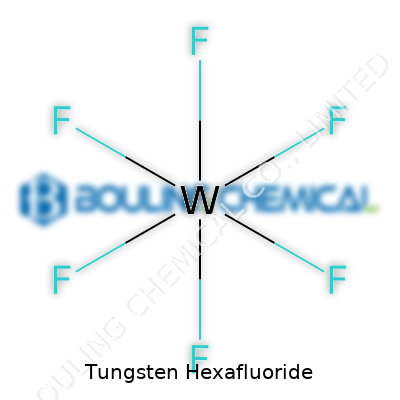
The formula is straightforward: WF6. It’s one tungsten atom holding hands with six fluorine atoms. The reason that looks intimidating on paper is exactly the reason engineers and chemists find it valuable—it’s reactive, heavy, and volatile. You might call it unforgiving if you’re the one who has to clean up a spill. The colorless gas fills up a room with a sharp, stinging odor that burns the nose, so experience says: keep the mask on and the ventilation strong.
The boiling point hovers just above room temperature, around 17°C, making it a gas during most work shifts unless you’re running a chilly operation. Crack a bottle open below that, and you end up with a clunky-looking pale yellow solid. Its density is nothing to sneeze at either—parts per million of this stuff in the air register fast with both instruments and your throat.
WF6 doesn’t play nicely with water. You get an aggressive chemical reaction when these two meet, throwing out toxic and corrosive byproducts. That reaction has real consequences in fabs or labs where a few careless drops of water or moisture can turn an experiment into a hazmat call. I once watched a facility shut down for hours over a pinhole leak. Nobody jokes about the clean-up.
People who grew up soldering radios or building their own transistors may not realize the role gases like WF6 play in modern manufacturing. The semiconductor world runs on razor-thin margins—of profit and possibility. Tungsten deposition depends on this gas. Each transistor gate in a smartphone probably owes its life to controlled doses of WF6 in a vacuum chamber. The future of computing, sensing, and signal transmission relies on a steady supply and smart handling.
Workers don’t stay safe by chance. Training runs deep, with repetition burned into muscle memory. Emergency showers, gas sensors, airlocks, and specialized scrubbers put a physical wall between people and chemistry. Regular inspections, constant leak checks, and an atmosphere of vigilance build a line of defense against incidents. The way I see it, fostering a culture of safety beats reacting to disaster every time. You don’t get a second chance with WF6.
Smart companies invest, not just in gear and tools, but in people who know how to respect this chemical’s risks. Sharing stories and lessons learned at safety meetings goes a lot further than just reading the rules. Responsibility isn’t a suggestion—it’s at the center of every successful operation using Tungsten Hexafluoride.
Tungsten hexafluoride, or WF6, marks its territory long before you see it on any site. This gas doesn’t get much attention from the public, but anyone who’s worked in a semiconductor lab or a chip-making facility will tell you there’s a good reason WF6 inspires respect. Just one whiff, without the right systems, will make you wish for a job at the local bakery instead. Exposure can burn the lungs and eyes, and even a tiny leak could force an entire building evacuation. For me, the memory of crews in hazmat suits, taking readings late at night during an alarm, left a lasting impact.
The problem with WF6 goes beyond toxicity. This gas, under normal temperatures, acts a bit like water vapor: it wants to condense. Exposure to moist air triggers the release of hydrofluoric acid, a substance that chews through flesh and glass alike. Toss in the fact that WF6 sits under pressure in cylinders, and you see why old hands in process engineering take extra care—careless handling turns an expensive shipment into a very dangerous situation.
Steel gets the call for most pressurized gases, but regular steel won’t stand up to chronic WF6 use. Nickel alloys and stainless steel, with their corrosion resistance, stay in demand for this job. These cylinders come with specific pressure ratings to contain WF6’s urge to liquefy. Regulators, gaskets, and fittings—all share the same rule: no questionable seals, no room for improvisation with parts off the workbench. There’s no scrimping on this hardware because the cost of a lost cylinder means more than wasted product; it risks the health of anyone nearby.
Warehouse safety doesn’t get flashy headlines, but a lot of disasters start with boredom and shortcuts. Cylinders holding WF6 should never sit near heat sources, direct sunlight, or in damp areas. Strong ventilation steers any unnoticed leak outdoors instead of letting fumes linger. It only takes a small mistake—a knocked-over cylinder, a stuck valve—before routine storage becomes an emergency.
Facilities have their storage racks tied down and chained off. Nobody wants a rolling WF6 cylinder, and even fewer folks feel comfortable storing it next to incompatible substances like strong acids or bases. I saw a warehouse manager forbid stacking anything above head height with these cylinders, and this extra caution makes sense. Sometimes even forklifts set off trouble if a careless driver bumps a secured shipment.
Well-meaning drivers and logistics staff play a critical role in WF6’s journey. Specialized trucks with dedicated mounts and segmenting blocks stop cylinders from rolling around. Common sense says not to leave these trucks sitting in the sun, and trained staff never skip routine checks. Road accidents happen, but a proper transport procedure—emphasizing mechanical security and route planning—minimizes the risk to neighborhoods along the way.
Regulations often force the issue by requiring placards and emergency response plans any time WF6 hits the highway. Training goes far beyond standard hazmat classes: staff learn symptoms of exposure and know exactly how to alert first responders. When companies make these steps part of daily routines, nobody is stuck improvising if an alarm sounds.
No shortcuts or clever cost savings can change the hazards tied up with tungsten hexafluoride. Facilities invest in inspections, and they stick with suppliers who can demonstrate clean handling records. When someone new joins the team, they learn the rules not as a formality but because every old-timer has a story that proves just how unforgiving WF6 can be. Solid procedures and a culture of respect for the risks turn this fearsome industrial gas from a liability into a useful tool—one that only ever gets used on its own careful terms.
Modern manufacturing isn’t only shaped by innovation; it’s also defined by what happens when chemical shortcuts impact health. Tungsten hexafluoride plays a silent role in the semiconductors powering laptops, phones, and the servers running whole economies. This gas seems invisible in daily life, but the dangers it brings along feel all too real for workers in high-tech industries.
Tungsten hexafluoride isn’t a household name. Those who work in semiconductor fabrication plants know it by its chemical properties—strong, colorless, and with an unmistakable smell that clings to your memory once you’ve inhaled it. This gas reacts with moisture, which means it can form a potent acid after contact with water, including what lines airways in your lungs. No one forgets the stories from older technicians who coughed uncontrollably after a minor leak.
You might think, “It’s rare, so why worry?” Trouble is, accidents in controlled environments still happen, and long-term exposure has a habit of creeping up. After breathing in this gas, people have reported tightness in the chest, coughing, and even chemical burns. Some say the damage lingers, as the fluoride compounds keep irritating the tissue long after the initial contact. A few hospital visits included cases of pulmonary edema—not something you walk off on a lunch break.
The real threat grows around cleaning and maintenance, not during regular runs when everything’s locked down tight. Valves fail or pipes corrode over time. One misstep or overlooked crack opens up a pathway for leaks. Plant workers have shared stories about suddenly feeling dizzy or lightheaded, only to realize a small but deadly cloud drifted past them. Rapid evacuation matters, but warning sensors and alarms don’t catch everything.
The worry spreads beyond factories. Transporting pressurized cylinders of tungsten hexafluoride on highways brings risk to neighborhoods around trucking routes. Emergency responders in cities and towns need gear and training specifically for this gas, since it reacts fast with any source of moisture. Spills could mean an event that stretches far beyond an industrial park.
Semiconductor manufacturers already rely on engineering controls: air filtration, gas detectors, and sealed process equipment. From what I’ve seen, success depends on constant vigilance. Regular maintenance checks and safety drills make a difference. For those dealing with the transport end of things, using double-walled containers and limiting quantities on a single vehicle can limit worst-case scenarios.
Training matters more than any piece of equipment. No one should walk into a fab, a shipping dock, or a storage yard without knowing what this gas can do. Worker education means real practice with emergency protocols, not just reading binders in a break room. Respiratory protective equipment should fit and function every single shift. For communities, encouraging companies to work with local emergency teams turns theoretical disaster plans into readiness.
Tungsten hexafluoride allows big leaps in electronics, but the risks need real respect from people at every level—from the boardroom planning new fabs to the new hire changing out a gas cylinder in the middle of a night shift. Health and safety demand more than policy—they require a personal stake from everyone involved.