Sulfuryl fluoride didn’t hit the headlines overnight. Research into this compound stretches back to the early twentieth century when chemists sought new ways to control pests beyond the reach of common insecticides. Unlike many agricultural chemicals that came from botanical sources, sulfuryl fluoride stems from human ingenuity in organofluorine chemistry. Companies and research labs saw a need for effective alternatives as pests developed resistance to older compounds like methyl bromide, which caused some real problems for food storage and wooden structures. In the 1950s, sulfuryl fluoride made its commercial debut as a fumigant, finding favor because it kept a lower profile in ambient air, didn’t linger as residue, and knocked out a surprising range of nasty insects. Over several decades, changing regulations nudged growers and pest controllers away from ozone-depleting fumigants toward options like sulfuryl fluoride. Eventually, its use broadened from protecting harvested grain in storage bins to keeping termites away from wooden homes, stacking another chapter onto the story, largely shaped by shifts in farming, food supply logistics, and public health rules.
Anyone who’s ever walked past a home tented for fumigation knows the kind of job sulfuryl fluoride is expected to do. Marketed under brand names like Vikane, it shows up as a colorless, odorless gas. Its main calling card is speed: within a short span, it spreads through spaces and gets into the nooks and crannies where pests hide. Using this compound comes with some built-in reassurance: unlike some aggressive pesticides, it doesn’t harm most building materials or leave stains. This clean profile, paired with effectiveness, keeps sulfuryl fluoride a go-to choice when infestations push conventional pesticides past their limits. Sales records and import data have put it consistently among the most requested fumigants year after year.
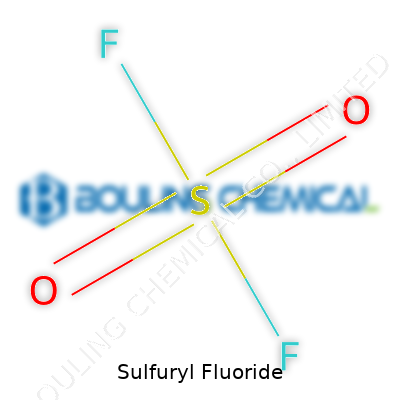
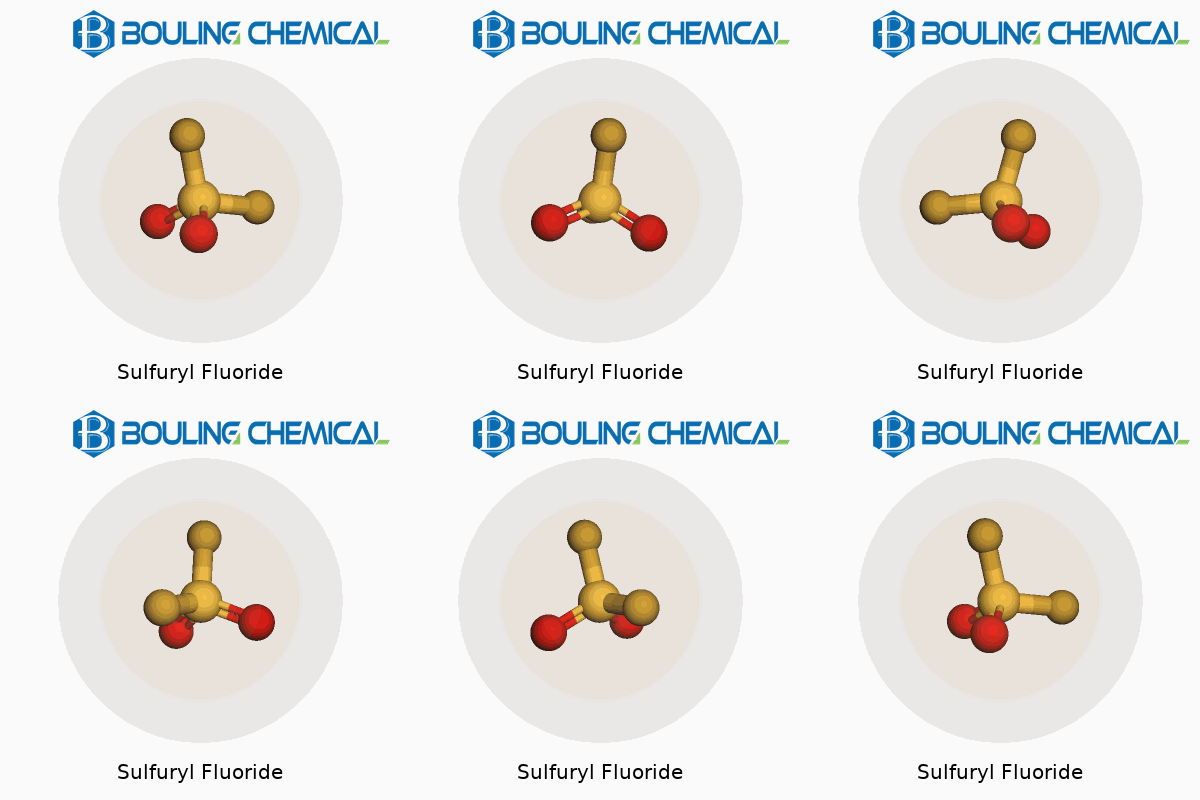
Sulfuryl fluoride is nothing if not reliable as a gas. Boiling at minus 55 degrees Celsius and condensing into a liquid only under significant pressure, it’s portable in steel cylinders, which beats a lot of alternatives for practicality and safety. Anyone handling it notices the absence of smell, making leaks a real concern for workers but also ensuring no tainting of stored food. The molecule itself packs a punch: one sulfur atom sits at the center with two fluoride and two oxygen atoms branching off. This stable geometry keeps it inert in storage and transport — it won’t corrode cylinders or react wildly with water or building surfaces. It dissolves in water to a small extent, and because it evaporates so quickly at room temperature, residues after aeration are minimal. That kind of volatility appeals to folks looking to clear out a building or silo quickly and safely.
Making sulfuryl fluoride isn’t for the backyard chemist. Production begins with sulfur dioxide and chlorine, which react to create sulfuryl chloride. Then, this substance reacts with sodium fluoride. Heating and processing push the chemical reaction forward, liberating sulfuryl fluoride gas. Industrial plants recapture and liquefy the gas for storage. Every step, from starting chemicals to end product, comes under strict control, and rightly so. Purity matters: leftover sulfur or free fluoride could undermine its effectiveness or pose larger risks. Plant designs usually include safety interlocks and gas scrubbing units to ensure releases stay within legal bounds, since environmental watchdogs don’t take kindly to fugitive industrial chemicals.
People working with chemicals know that synonyms pepper every label and shipment manifest. Sulfuryl fluoride has picked up a few: sulfuryl difluoride, SO2F2, and sometimes a trademarked name like Vikane. Chemists shout “SO2F2” in the lab, but homeowners see a friendlier trade name booked by pest control outfits. These aliases let different folks in the supply chain know they're getting the same product, even if international shippers or local regulators have a different label or translation.
Sulfuryl fluoride carries a certain stubbornness chemically. That stability in air and resistance to water make it uniquely suited to fumigation. Inside a fumigated space, sulfuryl fluoride lingers long enough to penetrate insect exoskeletons, but it exits quickly for ventilation. It reacts with water only under high heat and pressure, breaking down into fluoride ions and sulfate. This reluctance to react also explains why indoor surfaces look untouched, not pitted or etched, after a thorough job. Researchers sometimes push for further modifications, aiming for more selective breakdown in the environment after use—so far without the same cost-to-benefit ratio the original compound brings.
Handling sulfuryl fluoride takes real preparation. Nobody dispatches untrained crews with tanks of this stuff. Safety rules require full-face respirators, leak detectors, and warning signs plastered across any treated structure. Fumigation companies track wind conditions, gas concentrations, and reentry schedules with an eye for pinpoint accuracy. Federal and state regulations force notification, monitoring, and certified application, while ever-evolving occupational limits keep risk levels low. Professional crews ventilate structures post-treatment, and monitoring devices ensure that gas clears out before anyone returns. In practice, a blend of science, routine, and legal mandates come together to avoid tragic mistakes; experience in the industry shows that cutting corners only ends in disaster.
Sulfuryl fluoride finds fans well beyond the typical pest control sector. After wooden beams and stored grain, it moved into museums, libraries, and ships where protecting priceless objects or quarantined cargo demands a potent weapon against beetles, moths, and termites. Food processors use it to keep warehouse stocks bug-free, without risking flavor taint or left-behind residues that spark objections from buyers and health inspectors. The compound also scores points in lumber export, where governments lay down zero-tolerance rules for wood-boring insects. Broad use underlines its versatility and reliability; if a company needs a quick turnaround and gentle treatment of sensitive goods, few can compete with sulfuryl fluoride.
No conversation about sulfuryl fluoride escapes the toxicity debate. Studies over several decades have tracked its acute and chronic effects: at high concentrations, it’s a potent neurotoxicant, leading to convulsions and, without intervention, death. That’s plenty of reason for the strict controls seen in occupational settings. Low levels in homes cleared after fumigation generally pass health inspections, but calls for tighter reevaluation have grown after data pointed to possible long-term effects on people and pets. Rats exposed to low doses over years show signs of skeletal fluorosis, sparking ongoing dialogues among toxicologists and regulators. The U.S. Environmental Protection Agency and similar bodies worldwide keep reviewing research and tweaking exposure limits as new findings surface. As someone who’s spoken with pest control veteran crews, the attitude is clear: nobody underestimates the dangers, and precautions match the seriousness of the job.
Scientists haven’t stopped looking for improvements. Ongoing research centers on reducing emissions, developing faster detection gear, and finding safer ways to keep pests in check. Calls for green chemistry drive efforts, though sulfuryl fluoride’s unique profile gives it an edge compared to persistent organic pollutants. Engineers and chemists follow the trail of breakdown products, studying their environmental fate to ensure fumigation leaves no persistent mark. Some international treaties list sulfuryl fluoride as a greenhouse gas, heating up debate around its future in light of climate change goals. R&D continues to examine alternatives—new molecules, biological controls, and integrated management—to lighten reliance on chemical fumigants overall. Experienced researchers stress pragmatism over perfection; every shift in policy or technology ripples down supply chains, affecting farmers, shippers, and consumers alike.
The tug-of-war over sulfuryl fluoride’s future will come down to tough trade-offs. On one hand, the pressure hasn’t let up for effective, residue-free pest control in a world demanding safer food and goods. On the other, mounting concerns over environmental impact, toxicity, and long-term ecological footprints raise pressing questions about industry dependence on even the cleanest-acting chemical. Policy-makers and experts keep weighing risks against benefits, monitoring the latest research for signs of safer solutions on the horizon. Some see a day where sulfuryl fluoride’s use narrows to only the most critical situations, replaced elsewhere by smarter, less hazardous tools. For now, the story remains open, shaped by lessons from years past and ambitions for a healthier, more sustainable world.
Few things wake up a homeowner like the sight of termites gnawing away at wooden beams. In my neighborhood, house tenting season feels almost festive—bright striped tents popping up along the street. Most don’t know what seeps inside those tents. Behind the stripes, sulfuryl fluoride is doing the heavy lifting, clearing out pests in ways sprays and traps cannot match.
Sulfuryl fluoride stands out as a fumigant gas. Pest control companies favor it for whole-structure fumigations. Folks call for help against termites, bed bugs, and powderpost beetles. Unlike more old-school solutions, this gas sneaks into the wood, making it supremely thorough. The infestations don’t just pack up and hide; they get wiped out at every life stage. My friend, who once dealt with a deep-set beetle problem in an old bookshop, saw only brief success with surface sprays. A single professional fumigation finally ended years of frustration. Not many chemicals reach that level of penetration.
Stored grain and nuts invite insects like open homes call termites. Warehouses and shipping holds across the world depend on sulfuryl fluoride to clear out the bugs. Insects can ruin a crop quietly—by the time mold, frass, or holes emerge, the loss stings. Growers and exporters turn to this fumigant for rapid, predictable results. Its use grew when methyl bromide, an ozone-depleting chemical, got phased out. Sulfuryl fluoride didn’t trigger the same environmental alarms. Yet, nothing comes risk-free.
Sulfuryl fluoride lingered for years in the shadow of its predecessor. As more folks searched for safer options, new questions surfaced around its own environmental footprint. It’s not as notorious as other greenhouse gases, though studies reveal it stays in the atmosphere for decades and traps heat. Persistence in the air means what leaves the tented house doesn’t disappear. That realization landed hard among some environmental scientists. I’ll confess, I had no idea until I dug into research for a project in graduate school. Watching greenhouse gas numbers climb on paper put everyday pest control choices in a new light.
Pest control is about picking your battle. Skip treatment, and termites can gut a house’s value overnight. Over-apply, and the ecological bill gets bigger than most want to admit. The EPA and agencies in Europe set clear limits on how and when sulfuryl fluoride enters the scene. Well-trained professionals use gas monitoring equipment—not just for safety, but to keep exposure under strict control. Families can return to their homes safely, and businesses move their stock with confidence.
That’s not to say the conversation should stop at regulation. Newer pest control methods keep gaining ground. Heat treatments, controlled atmospheres, and building practices that block pests from settling in can push fumigants into the background. The right approach often means mixing tried-and-true treatments with smarter, lower-impact strategies. For now, sulfuryl fluoride remains a lifeline when infestations turn dire.
As consumers—and as neighbors—it pays to ask what goes into fixing termite trouble or saving a silo full of grain. Every tented home and treatment room is a small chapter in a much bigger story between comfort, commerce, and care for the planet. In my experience, good questions and honest discussion matter just as much as strong chemicals.
Years back, I helped my parents clear out an old shed behind their house. We ran into a termite problem, and someone suggested a fumigation service. The workers assured us the gas would get rid of the pests without much trouble. I remember asking if we needed to do anything special for the cats. “Just keep them out until we’re done,” one worker said. The chemical in question was sulfuryl fluoride, the go-to for killing bugs fast. But I still found myself wondering what this invisible gas actually does, and if it’s as safe as the pros claim.
Sulfuryl fluoride works by blocking key enzymes in the nervous system of insects, knocking out everything from termites to cockroaches. That’s certainly handy for homeowners. The trouble is, humans and pets have nervous systems too, and exposure raises real risks. According to the Centers for Disease Control and Prevention, people breathe this gas in during or after fumigation, often when workers don’t ventilate a building well enough. Short-term symptoms include headaches, coughing, numbness, and sometimes more serious effects like seizures. Pets, because they’re smaller and closer to the ground, can take in even more during an accidental exposure.
Long-term risks remain less studied, mostly because sulfuryl fluoride breaks down rapidly in open air. But the Environmental Protection Agency classifies it as a toxic material. If a pet or person enters a treated space before all the gas clears out, the results can swing from mild discomfort to life-threatening poisoning.
Companies using sulfuryl fluoride need a license, and government agencies require strict precautions. Yet problems keep popping up in real homes. The issue rarely lies with the chemical itself, but with shortcuts and communication gaps. Some fumigation companies cut corners. Others use signs and warning tape, but worried families or curious kids still go inside too soon. Pets are especially at risk. Cats love to squirm beneath things, and dogs often rush back into their favorite lounge spots. After a fumigation, traces of gas can linger in carpets, furniture, and bedding, even with plenty of ventilation.
Many homeowners trust the process without asking hard questions. They might not realize that not every company takes the same level of care. Also, follow-up checks after fumigation are often skipped, raising the chance for lingering exposure.
Termites and other pests can destroy a building in a few months. Still, most families would rather put up with bugs than risk the health of kids or pets. Alternatives exist, like heat treatments or bait systems, though these can be less effective for severe infestations. Homeowners ought to ask for written timelines showing exactly when it’s safe to return. Companies that attach gas detectors to treated buildings help ease concerns, because those alarms only switch off after gas drops below harmful levels.
Talking to neighbors who used the same company can help. Some local health departments offer reviews or can shed light on which companies stick to the rules. If I had to choose again, I’d be present for the entire prep process—moving furniture, putting away pet food, and double-checking that every living thing left the building.
Pest control sometimes feels like picking the lesser evil. Sulfuryl fluoride cleans out bugs better than most methods, but families need more than just a stamped permit to feel secure. Clear communication, careful monitoring, and honest risk talk mean nobody wakes up wishing they’d settled for a few termites instead.
Sulfuryl fluoride has become a go-to solution for tackling pests that burrow deep into buildings and grains. In the world of pest control, anyone who has tried do-it-yourself fixes knows that bugs often find a way back. They hide in woodwork, under floors, and inside walls. Regular sprays get the ones you can see, but not the colonies tucked away where hands and eyes can’t reach. Here, sulfuryl fluoride steps in, driving out everything from drywood termites to beetles by filling every pocket of air in a structure.
Some fumigants struggle to penetrate thick walls or hidden gaps. Sulfuryl fluoride spreads easily throughout closed spaces, even dense lumber or packed grains. It attacks the basic respiratory process in insects, knocking out entire populations at once. No selective targeting—if a pest breathes, it faces the chemical. That makes a big difference inside old houses, where termites love to nestle into decades-old beams.
I remember the first time a professional explained the safety steps for sulfuryl fluoride. Windows sealed off, doors locked down, giant warning signs out front. While the gas packs a punch against bugs, people and pets need to be out of the building during treatment. Once the space airs out, remaining traces break down quickly. Regulatory agencies keep a close eye on allowed exposure, and pest control teams use gas detectors to double-check before anyone goes back inside.
Regulators and scientists keep asking tough questions about how this fumigant breaks down in the atmosphere. Data shows sulfuryl fluoride lingers far longer than carbon dioxide and acts as a strong greenhouse gas. Its global warming potential prompted California to approve stricter rules in recent years, forcing operators to tighten up application techniques. While the chemical breaks insect cycles that would ruin crops or cause huge repair bills, there’s no getting around the need for tight safeguards and innovation.
Many pest companies now explore alternative methods alongside sulfuryl fluoride. Heat treatments and biological controls are gaining ground, especially in cases where repeated fumigation would bring diminishing returns. That said, a multi-million dollar food warehouse can’t risk a single infestation, nor can a homeowner let drywood termites eat away at their biggest investment. The immediate effectiveness of sulfuryl fluoride still matters. Ongoing training makes sure applicators follow the latest guidelines, use tougher tarps for containment, and keep emissions as low as possible.
A responsible path doesn’t mean ditching this gas entirely. It calls for smarter application, improved safety checks, and better public communication. Pest control workers need the right tools and up-to-date information to minimize side effects for people and the planet. Research into new fumigants and non-chemical approaches offers hope for the future—but until those prove as reliable, sulfuryl fluoride remains part of the toolbox.
Living with any pest threat means weighing risks and rewards. With the right oversight and a clear focus on both results and responsibility, sulfuryl fluoride can help get rid of bugs without leaving bigger problems in its wake.
Sulfuryl fluoride has made a name for itself in pest control, especially for dealing with termites and other persistent insects. Plenty of people recognize the trade names it goes by, thanks to pest control trucks parked in neighborhoods everywhere. What’s less known is how risky it can get if handled without care. From personal experience in the pest management industry, I’ve seen both veterans and newcomers run into trouble by underestimating just how sneaky and dangerous this fumigant gets.
It doesn’t take much of this gas in the air to put health at risk. When I started out, the training I got around sulfuryl fluoride focused hard on one thing: never trust your senses. This gas is colorless and nearly odorless—there’s no telling it’s there until it’s too late. Studies and safety reports back this up, showing the low margin for error. Exposure can mean everything from headaches and weakness to more serious problems like lung irritation or even death. You don’t get a warning whiff, so complacency is not an option.
Before anyone brings cylinders onto a property, the building has to be completely sealed. I’ve helped wrap up entire homes with heavy tarps, double-checking every door and vent. The seal isn’t about keeping bugs in but locking the gas where it belongs—inside the designated “kill zone.” Escaped fumes risk not only those working on-site but also neighbors, pets, and passersby. That responsibility carries weight: national workplace safety groups remind us how quickly this goes south without attention to sealing and continuous air monitoring.
Frequent checks make all the difference. Experienced teams treat timers and detection devices almost like a chef watches a stove—never leaving it unattended. I remember a time a detector caught a small leakage under a barely cracked window frame. Thanks to that alert, we caught and stopped it before neighbors downwind noticed anything amiss. Rushing through the aeration stage to get jobs done quicker never pays off. Letting out fumes takes patience, with time set aside to ventilate the structure completely before giving the all-clear.
Professionals wear protective gear that keeps the gas at bay, but it’s not bulletproof. Some skip steps because they think experience alone offers safety. That thinking leads to stories on the news about workers or even homeowners ending up in the emergency room. Companies now keep better training logs, and regulations step in with yearly certification requirements. For folks living in a recently treated building, clear instructions are handed out up front—nobody returns until several air tests confirm that it’s safe.
Better access to information would help everyone. There’s growing interest in using digital systems for tracking gas concentrations and access to up-to-date worksite readings. If tech companies keep developing low-cost, accurate sensors, the days of hidden leaks and delayed clearance could be numbered. In my experience, transparency—whether it’s an honest report for a client or a digital log for the crew—always leads to better safety outcomes.
Sulfuryl fluoride isn’t something to be feared, but it deserves respect. Regulatory agencies remind us to treat the gas like the hazardous tool it is. The best way to protect workers and families? Never assume, always check, and lean on proven facts and training. Real safety grows from habits, not haste. As technology improves and training reaches more corners of the industry, the track record for this fumigant can continue to improve—if people stay alert and focused on doing the job right.
Sulfuryl fluoride fumigation usually pops up when termites or other pests decide to turn homes into their playgrounds. I remember the first time I saw a whole house under an enormous striped tent, and wondered about all the warnings tacked onto the fence. Those warnings have a reason.
Sulfuryl fluoride is no joke. It works by filling the entire space, sinking into wood, fabrics, and walls, then breaking down the bugs from inside out. That same power makes this chemical dangerous to people and pets. You get a small window to pack up your valuables and get out. After the treatment, you can't just walk back in because there's no smart way for human lungs to deal with leftover gas.
Regulations from the EPA give clear direction. Most fumigators follow label instructions, which tell them to keep the home vacated for a minimum of 24 hours, but often the holdout stretches longer—around 36 hours or more, depending on the size and complexity of the structure. Some homes need extra time because porous materials hold on to residue. Licensed professionals test each property with special equipment, making sure the air is back to safe levels.
I know of folks who thought opening all the windows and doors a little early might speed things up. That’s risky nonsense. Sulfuryl fluoride lingers where air doesn’t circulate. Science shows people exposed without proper clearance suffer headaches, breathing trouble, and, in rare cases, worse. Pets and young kids hit the hardest. There's a reason you see technicians checking gas levels at multiple points before anyone comes home. Skipping a step in that process is gambling with your lungs for no good reason.
Experts recommend coming back only after certified fumigators confirm the air is safe. The test for sulfuryl fluoride isn't something you can Google and DIY. Special meters measure parts-per-million, with clear thresholds set by government bodies. If levels aren’t below the legal limit, nobody should take their chances.
Fumigators have shared stories about impatient property owners itching to come home early. Some think that because chemicals can’t be seen or smelled, everything’s fine. Data from state pesticide regulators make it clear—rushing the process can send people to the ER. In my own circle, one neighbor once tried to “sneak in” for forgotten cash. He ended up sitting outside with a nasty headache for hours because he ignored every warning.
Simple choices make all the difference. Trust the timeline given by your pest professional. Plan ahead so everyone has somewhere safe to go. Communicate with your pest control company, and don’t guess at your return. Ask for the exact time and verification check. On your way back, expect the team to finish air testing. If anything delays the green light, respect that process.
Some states go further than federal rules. Reading the labels and notices left behind gives clear guidance—these aren’t just for display. If you care about health, respect those directions like you would a stop sign at a busy intersection.
The story isn’t just about clearing out pests. It’s about recognizing real limits—what our bodies can handle and the expertise we pay our professionals for. Waiting the required time after sulfuryl fluoride fumigation gives your home back without danger lurking in the air you breathe.