Sodium hexafluorophosphate didn’t arrive overnight. Its history traces back to the post-war years, when the world turned its attention toward new materials for energy and communications. Chemists widened their hunt for electrolytes beyond the usual lithium salts, searching for compounds that ticked boxes on stability, solubility, and cost. Sodium hexafluorophosphate caught attention by bringing strong thermal resistance and decent solubility in polar solvents. This salt didn’t just come out of some forgotten chemistry cabinet; it was born of real-world necessity, sketched into being by hands eager for progress in energy storage and synthesis.
Sodium hexafluorophosphate—known in labs as NaPF6—has earned a reputation among chemical professionals and battery designers. Its form is a free-flowing white powder, unassuming but packing a punch for those in the know. Chemically, the salt embraces stability due to its tightly-bound PF6− anion, which shrugs off most common acids and bases. The physical profile—moderate solubility in solvents like water, acetonitrile, and dimethyl carbonate—plays a part in its broad use. On the shelf or in a reaction flask, it looks much like any other fine powder, but it's a world apart in how it withstands moisture and heat. Handling NaPF6 reveals its stubborn nature: it resists breakdown under most lab conditions, only yielding under concentrated acids or high-energy environments.
I’ve seen chemical labels with more numbers than a phonebook. Sodium hexafluorophosphate packaging isn’t limited to fancy terms—purity and moisture content matter most. Commercially, purity levels hover above 98%, and water should stay well below 0.05% to keep unwanted hydrolysis at bay. Bags, drums, or vacuum-sealed bottles make sense for shipping and storage, since this salt doesn’t play nice with moisture. Shelf life comes down to basics: keep it dry, keep it cool, and don’t expect miracles if you cut corners on how you store it.
You won’t find NaPF6 in nature; you have to build it. Most industrial prep involves a reaction between sodium fluoride and phosphorus pentachloride in the presence of hydrofluoric acid, trading some nasty reagents for a robust final product. This method won't win awards for eco-friendliness, but its yield and reliability keep it on top. Alternatives exist—some labs use hexafluorophosphoric acid neutralized with sodium carbonate—but these approaches introduce other headaches, like messy by-products or less control over purity. The general scene in production is less about glamour and more about making sure aggressive chemicals stay where they belong.
Sodium hexafluorophosphate doesn’t kick up a fuss during most reactions, which is what manufacturers like. Its role as an anion donor stands out: it swaps out with other cations in solution, making it handy for preparing ionic liquids or as an electrolyte ingredient. Under extreme heating or strong acid attack, NaPF6 will break down to produce hydrofluoric acid—a clear reason to avoid heating it more than necessary. Modifications on this molecule tend to happen on the application side, not the core structure, as its chemical stability limits further transformation without unwanted side reactions.
Walk into any laboratory from Shanghai to San Diego and you’ll hear sodium hexafluorophosphate referred to by a handful of names: NaPF6, hexafluorophosphoric acid sodium salt, or just “the PF6 salt.” Its unifying feature across languages and borders comes down to the PF6 anion, which signals intended performance in most battery circles, pharmaceutical syntheses, or research publications. It helps to know these synonyms, because talking shop about NaPF6 could get lost in translation without them.
Anyone who’s handled sodium hexafluorophosphate understands it isn’t a kitchen-table chemical. It reacts with moisture to release hydrofluoric acid—a compound infamous for burning skin and eating through glass. Experienced lab hands rely on gloves, face shields, and well-ventilated hoods, treating accidental spills with calcium gluconate gel or other neutralizing agents. The demand for tight operational standards isn't just a checkbox on a safety audit—it's vital to keep researchers and production workers protected from both immediate danger and long-term risk. Regular training and strict adherence to safety data sheets remain the backbone of any operation working with sodium hexafluorophosphate.
Few chemicals pull as much weight in the modern battery industry as NaPF6. In lithium-ion and emerging sodium-ion batteries, it acts as a stable conductor for ions, supporting the “heartbeat” of portable electronics and electric vehicles. Battery performance often spikes with the right mix of solvent and salt, and NaPF6's balance of stability, conductivity, and relative cost lands it in everything from phone cells to grid-scale power packs. It doesn’t end with batteries. Pharmaceutical labs lean on NaPF6 for anion exchange or as a counter-ion in producing novel compounds. Its footprint stretches into catalysis, the manufacture of specialty materials, and even niche applications in separation science.
Research labs and industrial developers both circle sodium hexafluorophosphate, hunting for tweaks that boost battery life, lower production costs, or cut down on toxicity. Investigators pour over electrolyte mixtures, chasing performance across more charging cycles at higher voltage. Competitive salts—such as lithium bis(fluorosulfonyl)imide or organic-based electrolytes—draw attention, but NaPF6 holds ground thanks to data-backed reliability. Publications track thermal decomposition, side reactions, and the creation of so-called solid electrolyte interphases (SEI), all essential for next-gen energy storage. Market expansion continues as new sodium-ion battery designs gain traction, boosting interest beyond lithium technology and widening research focus to suit this versatile anion.
Toxicology around sodium hexafluorophosphate centers on its hydrolysis products—notably hydrofluoric acid—that spell trouble for skin, lungs, and bones. Studies underline the rapid harm from acute exposure, prompting heavy restrictions and strict workplace controls. Chronic toxicity data remains sparse, but best practice involves minimizing airborne dust and regular health checks for those exposed day-to-day. Environmental impact sits front and center: accidental releases spark concern about persistent fluorinated byproducts, nudging regulators and industry alike to reevaluate containment and waste routines. Handling NaPF6 with respect isn’t just smart—it’s a matter of responsibility, both for individual safety and for the communities near production sites.
Looking ahead, sodium hexafluorophosphate faces both challenges and opportunities. The next decade signals a shift: battery technology evolves under heavy pressure, driven by demand for safer, longer-lasting electrolytes. Researchers eye new salts and solvent systems to replace or enhance NaPF6 in future designs, yet few candidates match its balance of price, chemical resilience, and electrochemical performance. Sustainability adds more weight—greener synthesis, better recycling, and tighter emissions controls influence the salt’s ongoing story. As sodium-ion batteries move closer to the mainstream and global manufacturers tentatively step away from cobalt and lithium dependency, expect NaPF6 to keep its foothold while absorbing lessons from past experience and new discoveries. Innovation in containment, handling, and end-of-life treatment may extend its relevance across industries, but only if researchers and producers stay one step ahead of the environmental and safety concerns that come with every new advance in applied chemistry.
Anyone who cares about the technology behind electric cars and portable electronics will bump into some tongue-twisting chemicals. Sodium hexafluorophosphate isn't a household name, but its impact runs through batteries powering today’s devices and vehicles. Most people probably walk past this compound's chemical formula, NaPF6, printed on technical datasheets without a second thought. The real story weaves through labs and factories that keep our modern world running.
I remember the excitement the first time I bought a phone with all-day battery life. Rechargeable lithium-ion cells set that milestone. Sodium hexafluorophosphate holds a key role in those very batteries, especially in the electrolyte mix. It acts as a supporting ingredient allowing ions to move efficiently between anode and cathode. No fancy technical jargon needed: batteries get their power because sodium hexafluorophosphate helps make the flow of energy possible. When this piece falls into place, you get faster charging, improved stability, and safety—benefits everyone relies on today.
Many researchers trust this compound because of its stability and performance, especially compared to alternatives that can break down, produce unwanted byproducts, or perform poorly at higher temperatures. The global shift toward electric vehicles—where every mile of range counts—relies on these little chemical details. A good electrolyte solution based on sodium hexafluorophosphate makes a world of difference for drivers. It’s not just about turning the key and moving; it's about building confidence in technology.
Concerns over chemical safety and responsible sourcing always weigh heavily in the debate around advanced battery technology. Sodium hexafluorophosphate isn’t without its own risks. Handle it the wrong way and it releases toxic gases. Years working in a laboratory taught me that even ordinary table salt seems dangerous in a large enough quantity and the wrong context, so the risk doesn’t single out this compound. But it’s fair for the public to ask tough questions. Factories producing battery-grade chemicals have to follow strict health, safety, and environmental rules.
Strong oversight helps, but managing waste and minimizing emissions—especially of fluorine-related substances—demands innovation. Companies are exploring new ways to recover or neutralize waste, and some are looking for safer, greener alternatives that still deliver the required battery performance. While replacing sodium hexafluorophosphate remains challenging, every step toward safer manufacturing matters.
The need for batteries won’t fade anytime soon. As electric vehicles roll into more garages and renewable energy grids spread across the countryside, demand for materials like sodium hexafluorophosphate will continue. Research into more sustainable, less hazardous battery chemistries helps set future directions. I’ve seen academic teams experiment with different salts or innovate new ways to slow degradation inside batteries. The market keeps pushing for options that protect both people and planet, without making technology any less accessible.
Paying attention to what powers our world, right down to its key chemicals, gives a better sense of what progress truly looks like. Sodium hexafluorophosphate has earned its spot for now, but ongoing curiosity and responsible action will shape where things go next.
Sodium hexafluorophosphate sounds like one of those long chemical names most people only see on product labels or safety notices in factories. A lot of folks just brush past it, assuming it’s something they’ll never deal with. But whether you work in a lab, a battery plant, or you’re filling out a Material Safety Data Sheet, questions about risk come up fast. I’ve run into this stuff mostly in conversations about advanced batteries and in online debates about ingredient safety. It’s more common than you’d think, mainly in making lithium-ion batteries and sometimes in specialty chemistry labs.
At first glance, sodium hexafluorophosphate looks innocuous—a white, powdery salt. But handling this material without respect is a recipe for problems. When it reacts with water, including the moisture on your skin or in your lungs, it produces hydrofluoric acid and toxic gases like hydrogen fluoride and phosphorus pentafluoride. Even a small whiff of those fumes can burn your airways or damage delicate lung tissue. That’s not an abstract risk. Studies – and some painful stories from chemical engineers – describe chemical burns, persistent coughs, and serious hospital stays after mishaps in plants that skimped on proper safety.
Touching the powder directly carries its own hazards. Exposure through skin can lead to painful irritation. Without gloves and goggles, it’s easy to make a mistake. Anyone who’s worked near caustic chemicals learns to treat every spill with caution. I remember a lab tech recounting an emergency drench and eyewash session after brushing some salt off a benchtop, thinking it was only a little dust. Safety routines exist for a reason.
Waste management matters too. Sodium hexafluorophosphate doesn’t just vanish after you use it. If it spills into water, it can poison aquatic life. Wastewater systems are often not equipped to neutralize the byproducts—hydrofluoric acid in particular will eat through glass and corrode pipes if not neutralized. The EPA puts strict regulations on discharge limits for fluoride compounds for good reason. Poorly managed disposal at industrial sites can mean headaches for communities downstream.
A lot of workplaces lean on personal protective equipment—gloves, goggles, respirators, chemical aprons—to keep folks safe. That’s not enough if the training isn’t there. Getting comfortable with hazard drills, keeping spill kits up to date, and installing good ventilation can prevent medical emergencies. Industry veterans will tell you: you don’t wait for the first accident to fix safety routines. Encouraging a culture where anybody can stop a job to call out unsafe handling helps more than any checklist ever could.
Some promising work looks at replacing materials like this with less risky alternatives, or at least tightening up supply chain transparency and traceability. That’s slow to roll out in big production environments, but it’s a direction everyone can get behind—fewer emergencies, cleaner sites, and less risk for those folks working on the front line.
Most regular people won’t come across sodium hexafluorophosphate outside of specialized settings. But as battery technology spreads into cars and gadgets and as recycling grows, more communities face the question of chemical safety. Local officials and neighbors deserve plain talk about these risks, clear labeling on transport trucks, and honest answers after a spill. If safety information sits behind jargon, communities have no chance to respond when it counts.
Sodium hexafluorophosphate doesn’t get brought up around dinner tables, but it’s common in industries touching everything from lithium-ion batteries to chemistry labs. Even though the word sounds like something from a high school textbook, the reality of storing this salt is anything but academic. This stuff demands respect, and missing a single beat can lead to a headache no worker wants, from fires to toxic fumes. For anyone who’s spent time around industrial salts, the lesson never changes: keep an eye on moisture, temperature, and containment, or pay the price later.
Factories don’t always invest in the best climate systems, especially outside high-tech fields. Every warehouse with sodium hexafluorophosphate, though, discovers quickly how much trouble moisture causes. This compound grabs water from the air, and once it does, it starts breaking down. At best, you’re facing product loss. At worst, water contact leads to the release of corrosive and toxic gases, including hydrogen fluoride—a substance seasoned techs treat with extreme caution. Anyone managing a stockpile keeps drums sealed, stores product off concrete, and rows everything in a dry, controlled room.
After humidity, storage containers come under scrutiny. Sodium hexafluorophosphate reacts with common building materials. Talking with warehouse workers or maintenance teams, you hear the same story: avoid steel and anything with the risk of slow corrosion. Instead, the best bet comes from high-density polyethylene or lined containers designed for aggressive chemicals. Even the tiniest leak or puncture turns into a hazard spill. Nobody wants to suit up in full gear just for a mistake that could have been avoided with one good inspection round.
Firing up a grill is one thing—dealing with a compound that produces toxic fumes when exposed to water is another situation entirely. Water-based fire suppression systems don’t help here; they actually make things worse. Experienced facility managers rely on dry chemical extinguishers and clear egress plans. Fire codes push for labeling, spacing, and keeping incompatible materials out of the same zone, but what saves most folks is regular drills and solid communication.
A hot, stuffy room might seem like an annoyance till the wrong fumes get trapped. Sodium hexafluorophosphate, if it degrades or breaks open, doesn’t give much time before the air becomes dangerous. Engineers who’ve lived through small incidents recommend strong mechanical ventilation—fans and negative pressure setups that whisk away anything dangerous before people breathe it. In my time on factory floors, I’ve watched seasoned workers wince at the memory of rooms with poor airflow, and I’ve never met anyone who thought cracking a window was good enough.
No storage plan works without people knowing what they’re doing. Labeling boxes, sticking up sheets with chemical properties, and going through yearly training all cut risk. It isn’t about passing audits—it’s about making sure the folks in the room don’t find themselves in danger over a split-second error. I’ve seen new hires spot swelling drums or odd smells just because old hands walked them through every warning sign on day one. That kind of training, more than fancy gear, keeps operations smooth and everyone out of trouble.
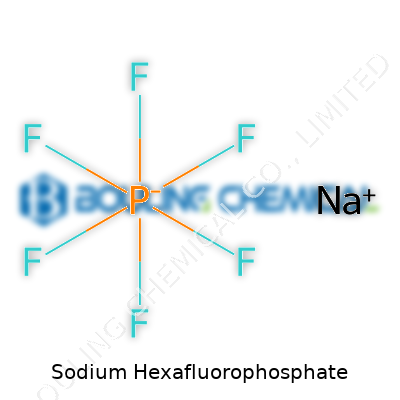
Sodium hexafluorophosphate, with the formula NaPF6, perhaps doesn’t roll off the tongue the way table salt does, but the compound packs quite a punch in technology circles. The formula tells the real story. One sodium ion locked in with a hexafluorophosphate anion, six fluorine atoms holding phosphorus in a tight grip. This isn’t a common household salt, though in a sense it is just as critical to everyday life—hidden in plain sight whenever someone charges a smartphone or powers up an electric vehicle.
For a long time, talk about battery breakthroughs filled tech news, but rarely did anyone mention sodium hexafluorophosphate. Its role starts inside batteries, particularly sodium-ion types, filling the job that lithium hexafluorophosphate does in the familiar lithium-ion variety. As the industry shifts attention toward alternatives to lithium-based products, the formula NaPF6 has turned more heads in research labs.
Sodium-ion batteries offer a shot at cheaper, safer storage. Sodium is abundant—no rare earth metals needed—and that brings a chance to ease the global strain for resources like cobalt and lithium. People sometimes assume switching out one element for another is as simple as swapping pieces in a machine, but chemistry doesn’t play along so politely. That's where compounds like sodium hexafluorophosphate matter most: they bridge the gap between old technology and new possibilities.
In my experience, incremental changes in chemical purity can make or break an entire process. Poorly purified NaPF6 fills a battery with impurities that can short-circuit performance, cause breakdowns, or even create safety risks. Years ago, I watched a project stall out because the electrolyte arrived with a barely noticeable level of contamination that, over time, wrecked dozens of batches. Unlike many compounds, slight variations aren't just a minor bump—they turn promising batteries to scrap.
This highlights a tough problem. Lower-cost batteries invite wider adoption, but scaling up production often means a tug-of-war between price and quality. If manufacturers take shortcuts, or global supply chains squeeze corners, those little formulation details could spiral into bigger failures. Device reliability depends on the discipline of chemical production and the rigor of laboratory oversight. Regulators can’t catch every slip, so companies bear the lions’ share of responsibility.
To hammer out a solution, industries could invest more in local production of sodium-based battery materials, especially NaPF6, right where demand rises. That would cut out shipping delays and offer firmer quality control. Universities and private labs can chip in, sharing best practices and building open forums for reporting problems with impurity levels or production hitches. Not every company will jump on board fast, but open information shifts incentives toward transparency and long-term gains, instead of quick sales.
The road to better, more affordable batteries runs straight through chemical know-how. The formula NaPF6 is more than a string of letters and numbers—it’s the key to unlocking the real potential of next-generation power, as long as we respect the chemistry and treat the details with care.
Sodium hexafluorophosphate doesn’t make headlines, but people who work with batteries or specialty chemicals know this compound matters. It’s not something to take lightly. One whiff of its reputation, and most chemists reach for their gloves faster than you’d expect. The stuff isn’t just hard to say. It reacts with moisture in the air, and that reaction produces a gas you really wouldn’t want to breathe—hydrogen fluoride, which eats through tissue and won’t make your dentist happy either.
Complacency grows fast in places where safety goggles and lab coats gather dust. Handling sodium hexafluorophosphate calls for more than rules on laminated cards. Nitrile gloves and chemical splash goggles aren’t for show, they serve as shields. In the lab, I’ve seen close calls when people trusted bare hands for a quick transfer or poked around open containers. Even a minor spill on a benchtop turns into a real problem, fast, if it comes in contact with moisture. Fumes can sneak up your nose before you know it, especially in the musty corners of an old lab with tired ventilation.
There’s no substitute for a good fume hood. If sodium hexafluorophosphate gets exposed to water, you get hydrogen fluoride gas, and a whiff of that will change your opinion about “minor” incidents forever. Fume hoods, splash shields, air monitors—these aren’t luxuries. They’re as crucial as the flask holding your sample. You learn to keep containers dry, sealed, and labeled. I’ve seen too many projects stalled because someone overlooked a leaky seal or left a bottle cap half on.
The habits forged in technical training matter, but shared accountability shapes real-world culture. I recall a situation where a new batch arrived with some powder caked around the rim. One technician noticed, called for help, and avoided a risky cleanup solo. Routine checks on container seals and simple labels can prevent confusion. The best labs have checklists for incoming materials, disposal, and cleanup. They use proper waste containers and don’t let anyone toss sodium hexafluorophosphate down the drain.
People get so focused on daily routines, it’s easy to ignore the bigger picture. Sodium hexafluorophosphate doesn’t just go away after the experiment. It needs careful storage while waiting for disposal. Piling up waste for too long increases risk. In communities with strict environmental rules, mishandling chemicals leads to investigations or worse. Beyond fines, accidental releases affect water supplies and animal health. We’ve all seen stories of one bad disposal choice causing years of trouble.
Over the years, I’ve seen the best improvements come from peer feedback and clear communication, not memos from upstairs. Talking openly about near-misses and sharing what went wrong helps everyone learn. Good habits stick when teammates remind each other and set examples. Safe handling of compounds like sodium hexafluorophosphate doesn’t rest on policy documents, but on the everyday choices people make. Bringing the conversation out of the safety manual and into the break room makes a bigger difference than any rulebook ever printed.