Fluorobenzene came about as chemists chased new directions in organic synthesis during the nineteenth century. Back then, pioneers noticed that putting a fluorine atom into benzene turned the molecule into something both familiar and new. The early studies were slow going—fluorine itself carried a reputation for being tough to tame. Still, by the late 1800s, academic scientists had managed small-scale syntheses. As the chemical industry swelled over the next century, the method for producing fluorobenzene sharpened. The Sandmeyer reaction, among others, let labs move from milligrams to much larger amounts. These foundational moments set the stage for the broad adoption seen today, especially as the needs of pharmaceuticals, agrochemicals, and materials research surged.
Fluorobenzene looks simple—just a benzene ring with one hydrogen swapped for a fluorine. Yet this change flips the script on how the molecule behaves. The carbon-fluorine bond brings stability and unique reactivity. Its clear, slightly sweet-smelling liquid form belies the power built into its atoms. A molecule weighing in at 96 grams per mole, with a boiling point around 85 degrees Celsius, slots easily into laboratory glassware. This substance doesn’t just slip into reactions as a bit player. It influences electronic properties so strongly that chemists rely on it for tasks ranging from solvent work to building blocks for more complex molecules.
Pick up a bottle in the lab, and it feels much like any other aromatic solvent. But one whiff reminds you: fluorobenzene sets itself apart. Its moderate volatility means it can be handled without dramas common to more reactive organics. That said, it carries a certain punch—flammable enough to require respect. It’s just heavier than water, but not by much, with low solubility in water and full compatibility with most organic solvents. The real difference lies inside the molecule. Electronegative fluorine tugs electron density, sharpening the reactivity at positions around the ring, so substitution reactions can be tuned with precision. This subtlety opens the door for synthetic chemists, letting them steer reactions in ways plain benzene never allowed.
Walk into any chemical supply store or check an inventory list, and you’ll see specs for purity—usually above 99%, unless you’re buying in bulk for less critical uses. Labels tend to carry hazard symbols for flammability, chemical irritation, and potential health impacts. Genuine experience in the lab means trusting not just the supplier’s numbers but also inspecting for clarity, lack of debris, and ensuring storage away from incompatible reactants. Experienced chemists keep fluorobenzene in tightly sealed amber bottles, often with controls to limit evaporation and ensure workplace safety.
In the past, making fluorobenzene began with aniline and a dose of fluorine chemistry that challenged even seasoned experts. The reaction most folks turn to involves the diazotization of aniline, then replacement of the diazonium group with fluoride—tried, tested, and reliable. A shot of nitrous acid, a controlled dash of hydrogen fluoride, and the chemistry yields up this crucial aromatic compound. Larger plants tend to use more refined or automated methods, but at the bench, simplicity matters. As someone who’s watched a reaction flask bubble in anticipation of a new aromatic, I recognize the frustration and thrill of process chemistry—yield matters, but reproducibility keeps a project alive.
Chemists can transform this molecule in dozens of directions: perform nucleophilic aromatic substitution to stick on other groups, leverage its electronic characteristics to coax out regioselectivity in further transformations, or use it as a launching pad for more exotic syntheses. In research and development, having a simple but finely tunable substrate saves time and resources. Those earlier days of testing every possible ring substitution paid dividends—nowadays, I appreciate that you can see the direct line from theory to practical outputs. Whether aiming at pharmaceuticals, custom polymers, or advanced agrochemical candidates, fluorobenzene serves as a reliable, versatile tool in synthetic planning.
Ask around, and people might call fluorobenzene “phenyl fluoride” or even just “FB.” The world of chemical naming juggles formal IUPAC terms with down-to-earth shorthand, all depending on the context. Casual lab talk values brevity, while formal publications stick to official names. As someone moving projects from bench to report, I see how consistent naming keeps everyone aligned—no time for guesswork when raw materials get delivered by the drum.
Fluorobenzene brings risks: inhalation, skin contact, and environmental impact. Its toxicity isn’t sky-high, but the potential for irritation ranks real enough. In the lab, fume hoods, gloves, and goggles come standard. Nobody wants to breathe in that sweet, sharp odor for long. Storing the chemical in tightly capped bottles in ventilated, cool areas seems obvious, but it only takes one mishap to learn the value of boring safety routines. Waste disposal also matters: halogenated aromatics don’t break down easily in nature, so experienced hands treat them with the respect tied to their potential for harm. Accidental spills mean immediate clean-up with absorbents and prompt reporting. In industry, protocols demand separate storage from oxidizers and acids to hedge against worst-case scenarios.
Fluorobenzene’s mainstream applications lie in pharmaceuticals and agrochemicals. Adding a fluorine atom often improves drug stability and alters how a compound moves through the body. In crop science, tweaking molecular function wards off pests with greater precision. The electronics sector leans in, too. Specialty polymers, liquid crystal displays, and coatings take advantage of properties delivered by the benzene ring paired with fluorine. For researchers, this compound also acts as a solvent or as a model substrate for investigating new reaction mechanisms. I’ve seen firsthand how an experiment with a small fluorinated aromatics library seeded bigger breakthroughs in material design and performance.
Research keeps pushing the boundaries for fluorobenzene. Scientists look for greener, safer methods to attach fluorine atoms onto aromatics, all to cut down on toxic reagents and high-energy demands. Catalysis, flow methods, and electrochemical routes now claim the spotlight. Teams also study how small tweaks in the molecule influence bioactivity—a lesson echoed across drug discovery projects. Labs harness computational chemistry to predict what happens as the fluorine atom moves around the ring, saving months of dead-end experiments. Watching these shifts from old-school benchwork to ideas powered by machine learning, it becomes clear that the story of fluorobenzene isn’t stuck in the past; new tools keep expanding its reach and importance.
Though fluorobenzene isn’t the most dangerous aromatic in the storeroom, it comes with warnings. Tests point to moderate toxicity; breathing vapors or splashes on skin deliver headaches and nausea. Chronic exposure can stress the liver and nerves, so labs set time-weighted exposure limits and train newbies with real talk—no sugarcoating. In accidental releases or spills, the risk to aquatic life matters, too. Environmental agencies push for catchment and treatment of waste, and engineers work up new ways to scrub emissions before they reach the outside world. Forms of personal protective equipment—think nitrile or butyl rubber gloves, properly vented hoods, and chemical splash goggles—make up day-to-day defense in active labs.
Fluorobenzene keeps earning a spot in the toolkit of synthetic chemists, formulation scientists, and material designers. Green chemistry pressures everyone to come up with less polluting, more efficient ways to turn simple molecules into useful products. The push for sustainable manufacturing and better waste treatment will shape how everyone uses and disposes of halogenated aromatics. Industry limits and consumer demand for cleaner products mean that researchers keep experimenting with alternative fluorination strategies and recycling techniques. As our understanding of health and environment deepens, teams worldwide work to shrink risks and expand the potential of this ever-useful compound. A single atom swap in benzene built a chemical that changed the game—and every day in the lab, new chapters get written in the story of fluorobenzene.
You probably don’t bump into a bottle of fluorobenzene during an average day, and unless you work in a laboratory or a chemical plant, you might not even recognize the name. Yet, this colorless liquid shows up time and again in places where things are being made, tested, or discovered. With a whiff like almonds mixed with nail polish, it’s unmistakable for those who’ve handled it. What makes this basic-looking ring of carbon and fluorine matter so much? That comes down to its unique properties and the heavy lifting it does in chemical work.
Fluorobenzene turns up in labs and factories as a stepping stone. It’s used by chemists as a starting ingredient, or “building block.” Picture a group project in high school—everyone brings one key thing to the table, and together you make something much bigger. Fluorobenzene is that one friend who always helps start the project. It goes into the mix when making pharmaceuticals, herbicides, and specialty plastics. The reason: swapping out one hydrogen atom in benzene for a fluorine atom changes everything. That single change brings extra stability and gives new molecules the ability to combat moisture, heat, or even aggressive solvents.
There’s hardly a corner of medicine where chemical compounds don’t matter. Add a fluorine to a drug’s backbone, and sometimes it lasts longer in your body or does a better job blocking disease. Fluorobenzene opens the door to a host of compounds researchers see as promising. It supports the production of anti-inflammatories, some antibiotics, and even drugs used for cancer treatment. Drug design teams keep it close because it makes tailoring new compounds easier, sometimes leading to simpler, more efficient syntheses.
Farmers don’t usually patch a field using raw chemicals, but their pesticides or fungicides sometimes trace part of their roots back to fluorobenzene. Agriculture giants use it to build molecules that protect crops or help them grow robustly, without falling apart under sun or rain. The chemical’s reliability lets manufacturers tune pesticides for potency and safety, giving growers some powerful tools in feeding the planet.
Anyone who’s handled advanced electronics, specialty paints, or waterproof fabrics might not know fluorobenzene, but they’ve seen the results. It gets used to make materials that handle stressful conditions—super-thin films for electronics, resins that shrug off corrosion, or coatings that never peel. Strength, flexibility, and resistance to both weather and chemicals often trace, at least in part, to this small molecule entering the synthetic pathway.
Fluorobenzene isn’t exactly benign. Inhalation or skin contact can cause harm, and repeated or prolonged exposure must get managed carefully. Environmental questions hang over all fluorinated chemicals, since they persist and can build up. Safer handling and disposal systems, as well as tighter tracking, should be a non-negotiable point, not just for factory workers but for nearby communities. Pushing for greener alternatives and more recycling of chemicals stands out as the obvious next step.
Chemistry’s progress often depends on small, dependable ingredients like fluorobenzene. The stuff deserves respect—not just for what it helps create, but for the responsibility that comes with its use. As industries chase new therapies, safer crops, and tougher gadgets, they’d do well to remember the balance between innovation and stewardship.
Ask most folks about benzene, and chances are they’ll recall its reputation in gasoline and solvents. Slip a single fluorine atom onto that ring and you get fluorobenzene—a clear, colorless liquid that tells a bigger story than its simple structure hints at. My start in chemistry involved plenty of strong odors wafting off small vials, and I'll never forget the sharp, slightly medicinal whiff fluorobenzene gives off. It’s familiar, yet edged with something cooler than plain benzene.
Fluorobenzene looks a lot like water in a glass vial—clear, easy to swirl, but that's where the similarities end. With a boiling point just above 85°C, it’s not going to stick around long on a hot plate. Its density lands delicately below water, clocking in just under 1 g/mL, so it floats in odd little puddles when water’s nearby. Get it on your skin and you'll sense an oily slipperiness, enough to make you reach for gloves before diving in.
Unlike heavier organics, fluorobenzene evaporates at room temperature. I remember leaving a bottle open for a few hours and watching the level dip—proof of its volatility. Labs keep it sealed for good reason: fast evaporation equals higher risk of breathing it in.
Forget the drama of pure benzene. Add that fluorine atom and suddenly the aromatic ring holds tighter to its electrons. You get a stable, less reactive cousin. That might sound boring, but it's exactly what gives fluorobenzene some value. The carbon-fluorine bond holds ground against most acids and bases, making the molecule tougher than many of its peers.
This extra stability means chemists rely on fluorobenzene as a building block in organic synthesis. You won’t catch it playing nicely with strong reducing agents or wild, uncontrolled reactions. This is also why it pops up in pharmaceuticals. Those crafting new drugs want molecules that break down slowly in the human body, so a patch of fluorine does the trick. It buys extra time, lets things happen at a measured pace.
Fluorobenzene doesn’t get a free pass. Volatile organics never do. Breathing in its vapor can irritate your lungs or eyes, and when it’s used in bulk, proper ventilation isn’t just a checkbox—it's essential. I’ve seen careless handling turn a routine cleanup into a coughing fit, which always offers a quick reminder: just because something’s clear and ‘just one atom off benzene’ doesn’t mean it’s not a risk.
The rise of fluorinated compounds calls for smarter handling and better understanding of the long-term impacts—environmental and human. Fluorobenzene’s persistence means waste can hang around, sneaking into water or soil. Fact-checking how labs dispose of it should really be standard practice, but shortcuts still crop up. Investing in closed-system handling and pushing for greener alternatives can temper those risks.
If anything, my time with chemicals like fluorobenzene taught me this: it’s the subtle changes in a molecule that make all the difference, both in the lab and out in the world. Respect the chemistry, stay sharp about the hazards, and always look for new ways to work safer.
People working with chemicals sometimes fall into routines, figuring if they haven’t had any incidents, things must be fine. I learned early on in a lab that this “it’ll be fine” mindset falls apart fast in a real emergency. So much about chemical safety isn’t just about having rules, but about the real-world habits built to keep people safer every day. Fluorobenzene might not jump out to everyone as a household name, but anyone who works around it soon realizes why good habits with its storage and use can save a lot of heartbreak.
This liquid comes with a noticeable, penetrating smell. Even without knowing the details, one quick whiff warns you that some serious chemistry is present. More importantly, fluorobenzene fumes catch fire easily. All it takes is a single spark in the wrong place—a mistake I’ve seen nearly happen because someone thought a little bit of open flame probably wouldn’t matter. Storing it in a cool, well-ventilated spot, far from any ignition source, is non-negotiable. The science behind its flash point and volatility makes that clear. A solid chemical cabinet, away from sunlight and tightly sealed, goes a long way. Locks on that cabinet, regular checks for leaks or cracks, and a clear written record of who uses what—these habits make tragic news stories far less likely.
Once, I watched a coworker handle a bottle with a single glove—his bare hand ended up with splashes. Moments later, he felt dizzy and nauseous. People hear that this chemical can be absorbed through skin and write it off, but the risks are real. Any routine should include not only gloves, but goggles and a proper lab coat. That doesn’t mean hazmat gear every time, but slip-ups come fast if someone gets complacent. Effective training can’t just be a video people watch once; regular reminders about the symptoms of exposure, and immediate steps for eye or skin contact, keep the lessons fresh. Companies should offer clear, easy-to-access Material Safety Data Sheets and leave no room for confusion.
Fluorobenzene can evaporate in an open room, creating health risks for anyone inside. Proper ventilation ensures vapors move outside, not into someone’s lungs. Fume hoods aren’t a luxury—they’re basic protection for anyone who works with aromatic solvents. I’ve learned the hard way that investing in good airflow isn’t just best practice, it’s good sense. If someone notices a wheeze or headache in the lab, don’t brush it off or “wait and see.” Small health signals are sometimes the loudest warnings.
Managing chemicals safely asks for more than ticking boxes on a checklist. It’s about people trusting each other to do things right, even when nobody is looking. Supervisors and team members should keep each other honest, speak up about cracked bottles, and encourage reporting small incidents before they become big issues. Regular reviews of storage conditions, clear signage, and thoughtful training keep everyone on the same page.
Investing in good storage, clear procedures, and open communication pays off with fewer injuries and a healthier work environment. That mindset—care over convenience—is the single best practice I’ve seen for keeping everyone safer around fluorobenzene.
Many people don’t realize just how often chemicals like fluorobenzene float through the background of our daily routines. Though most folks won’t run across a vat of this substance on their walk to the store, people who work in labs, manufacturing plants, or chemical storage facilities may not have a choice. Knowing the health hazards isn’t just for scientists—anyone near these materials, even by accident, can be in the line of fire.
Take a short look at what happens inside the body. Fluorobenzene comes in as a vapor or sometimes a splatter on the skin. Breathe it in, and the first thing that hits is irritation. The nose burns. Throat dries out. Some folks get headaches, confusion, or feel dizzy. At higher doses, the chemical travels deeper, entering the bloodstream, heading straight for the nervous system. Nausea and vomiting can follow. Long exposures may bring trouble with coordination or even unconsciousness. A healthy adult might bounce back after light contact, but children or people with asthma face a sharper risk.
No chemical should have free rein across your skin. If it does, redness and itching won’t be far behind. Skin can absorb fluorobenzene, and some of it might enter the system this way. Long contact—like a soaked glove—accelerates the rate. The risk spikes in hot or humid settings where sweat opens pores and increases absorption.
The body does its best to break down chemicals, but fluorobenzene piles on extra workload for the liver and kidneys. Over time, repeated or high-level exposure strains these organs. For those already struggling with health issues, recovery from even a short bout of exposure drags out. Workers in tough industries don’t always have clear health-monitoring or easy access to medical help, which makes this situation even trickier.
Short-term effects might be the tip of the iceberg. Evidence suggests that years of regular, low-level exposure increases vulnerability to organ damage. Some aromatic compounds have ties to cancer, and though solid links for fluorobenzene are still under investigation, caution isn’t overkill. Chronic headaches, mood changes, and feeling tired all the time are symptoms that sometimes get brushed off until deeper trouble makes itself known.
Addressing the problem starts with awareness. Protective gear works, but only if it fits the job and gets used every day. Good workplace ventilation matters. Regular medical checkups for people who work with hazardous chemicals shouldn’t be optional. Companies should train employees to recognize the signs of exposure, not just hand out an instruction sheet. Simple steps—like making sure chemical labels stay clear or cleaning up spills the right way—can make a real difference.
People who’ve dealt with chemical mishaps remember their symptoms much longer than the moment of exposure. I’ve worked in environments where a single careless moment or broken glove line led to headaches that stuck around for days. Colleagues have told stories about mild exposure gradually adding up to big health problems not catches until checkups.
Taking fluorobenzene lightly opens the door for health emergencies down the road. Relying on personal experience, hard facts, and real workplace stories can keep the risks from turning into a crisis. Staying informed gives people a real shot at protecting themselves—and the folks working right beside them.
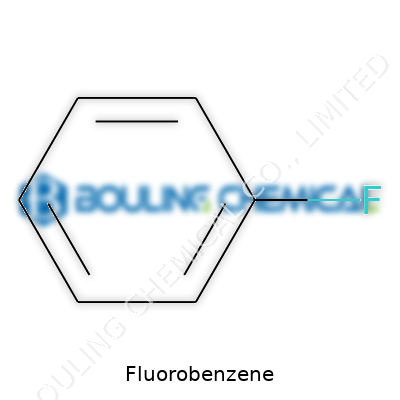
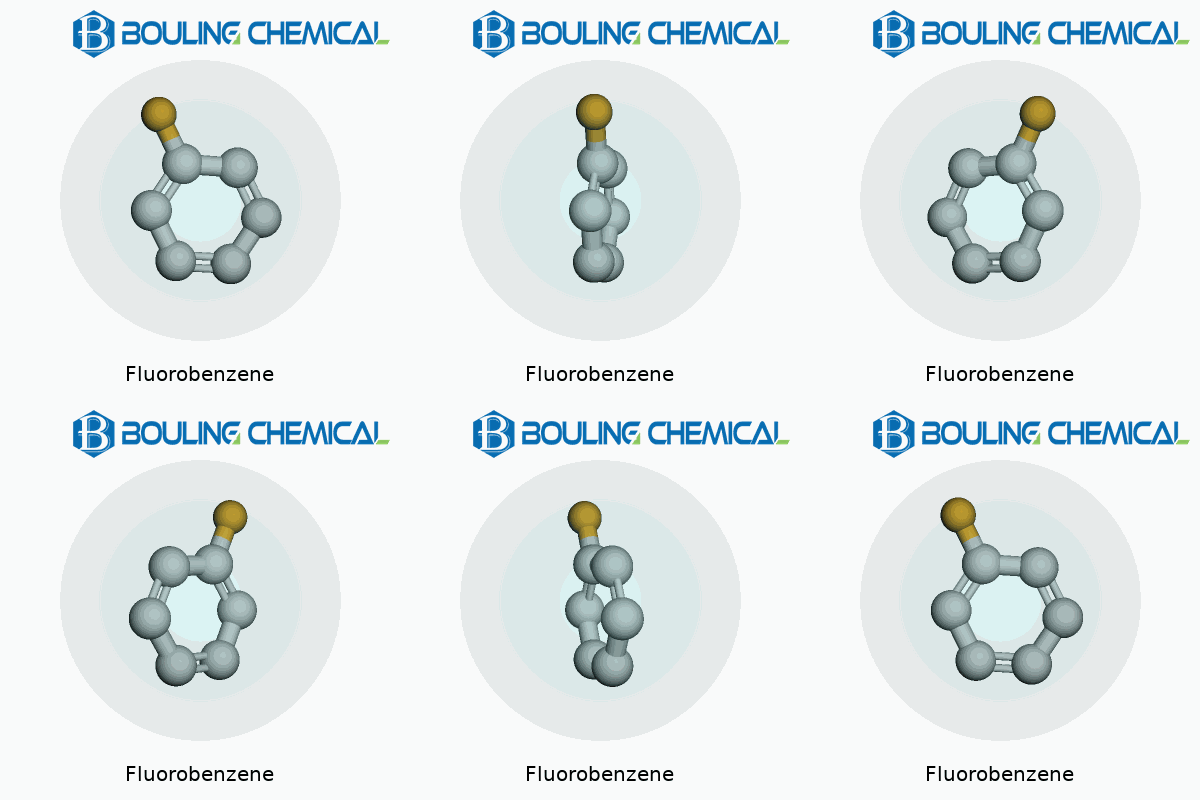
Fluorobenzene keeps things simple and elegant. You get a benzene ring—six carbon atoms linked in a flat, aromatic loop—plus a single fluorine atom replacing one of the usual six hydrogens. That gives this molecule the formula C6H5F. The flat, symmetrical nature of benzene’s core doesn’t change, but swapping one hydrogen for a fluorine atom brings a new set of properties to the entire ring.
Chemists sketch fluorobenzene as a ring with one branching fluorine, and though it looks unassuming on paper, the presence of fluorine makes a big difference. Fluorine comes in as the most electronegative element, and this attribute alters how the molecule interacts with its environment and with other chemicals.
Science can seem abstract until you see how molecular tweaks like this drive real-world change. Adding that fluorine doesn’t just adjust the formula—C6H5F—by one letter. I worked in a lab over a summer where aromatic compounds served as building blocks for everything from pharmaceuticals to specialty plastics. We needed molecules like fluorobenzene because the fluorine atom brings toughness to the table. It slows down the sorts of reactions that would rip apart other similar rings.
That single substitution also shapes the molecule’s reactivity in meaningful ways. Electrons move differently in the presence of fluorine’s powerful pull. The molecule becomes more resistant to attacking reagents, making it a good foundation when stability is the priority. Chemists lean on this trait—resistance—when constructing larger, more complex molecules that need to balance durability and reactivity. Anyone who’s ever tried to make a stubborn, long-lasting polymer knows why this matters.
It surprised me how many everyday goods depend on chemistry like this. Fluorobenzene and similar compounds end up as intermediates in the manufacture of drugs, dyes, and conductors. The fluorine not only lends durability but sometimes unlocks entirely new uses because it changes how the molecule fits into larger structures. Think of it as swapping one puzzle piece in a six-piece ring—suddenly, the way it clicks into place with neighboring fragments is different.
I once worked with a team tracking the environmental side of aromatic compounds. We saw how persistent these fluorinated rings could be in rivers and soil. There’s a flipside to all this molecular stability: what lasts in an industrial process can last in the ecosystem, too. That tradeoff drives a lot of debate around responsible use. Many industries strive for greener alternatives, but they keep coming back to these sturdy, reliable molecules because they solve problems no other chemicals can tackle.
Chemical companies and regulators know the risks tied to the persistence of compounds like fluorobenzene. Researchers explore ways to engineer molecules that keep the best of both worlds—strong performance and easier breakdown. The move toward sustainability takes creativity and a willingness to rethink even seemingly settled building blocks. Fluorobenzene stands as one of chemistry’s quiet achievements: small molecular change, big implications, and a lot of responsibility for the people who use it.