Calcium fluoride often doesn’t get top billing in the stories of science, but its history sheds light on a mineral quietly shaping innovation. For centuries, people mined fluorspar, the raw mineral form of calcium fluoride, to help smelt metal. The name “fluorite” comes from the Latin word “fluere,” meaning to flow, which points to the way calcium fluoride eased the hard work of separating metals. Later, in the late 19th century, chemists learned that this mineral could yield a strange green-blue fluorescence, a discovery that set off new understandings about atomic behavior. When I first handled a specimen in the lab, seeing both its chalky ruggedness and its clean geometric crystals, it struck me as a real bridge between practical labor and pure science.
Talking about calcium fluoride usually means stepping into several worlds at once: chemistry, optics, manufacturing, even dental care. The compound forms naturally as fluorite and shows up most broadly in industry as a source of fluorine. It looks pretty unremarkable at first glance, a rough gray or purple crystal, but grind it down, purify it, and the real power comes out. Pure calcium fluoride exhibits clear transparency to ultraviolet and infrared light, making it uniquely valuable for optical windows and lenses. While most of us don’t think about what goes into making lasers or telescopes, those technologies depend on this material doing its job quietly and well.
The material usually forms colorless to pale blue or purple cubic crystals. Its density sits around 3.18 g/cm3, and it barely dissolves in water, which helps explain why it survives without breaking down in natural rock formations and mineral veins. Calcium fluoride withstands heat handily, with a melting point above 1400°C, and remains chemically stable against most acids—though hydrofluoric acid can break it down. In the lab, it goes mostly unnoticed until you need something that resists sudden temperature changes or transmits ultraviolet light. More than once, I’ve seen researchers grab a plate of it for spectroscopy, trusting in its purity to avoid skewing results.
Labels on calcium fluoride shipments focus on purity and crystal size, two details that can make or break its use in high-precision optics or metallurgy. Purity can climb past 99.9% for scientific uses, and even tiny variations affect the clarity of lenses or the performance of fluorine production. Container markings usually indicate whether the product comes from chemically synthesized material or direct mineral extraction, because certain trace minerals can alter its behavior in sensitive applications. On my own desk, I keep a sample labeled for spectroscopy, because even dust or organic residue can create haze or scattering in a lens.
Most calcium fluoride comes straight from mining, where ground fluorspar goes through sorting, crushing, and cleaning. For scientific and optical-grade calcium fluoride, chemical synthesis gives far better control over purity: chemists mix calcium sources with hydrofluoric acid under conditions that favor large, clear crystals. This method keeps impurities in check and sets the stage for cutting and polishing into windows or prisms. Preparing it in the lab, I’ve watched crystals grow, layer by layer, inside temperature-controlled chambers that look like props from an old science fiction movie.
Despite its stubborn stability, calcium fluoride still finds itself at the heart of chemical processes. Mixing it with concentrated sulfuric acid gradually produces hydrogen fluoride, a gas with outsized industrial value but risky handling needs. In metallurgy, calcium fluoride flux reacts with silicates in ores to lower melting points and pull out metals from their oxides. Chemists keep an eye on this material during processes that potentially release fluorine ions, since these can become environmental hazards if not managed. In my own work, we sometimes doped calcium fluoride with rare earth metals to tweak its optical properties for laser experiments, showing just how flexible a base this compound offers.
Most people know calcium fluoride simply as “fluorspar” in mining or commerce, while scientists and optics makers stick to “calcium fluoride,” or sometimes “CaF2.” The trade handles it in various grades: acid-grade, ceramic-grade, and metallurgical-grade, each tuned for specific sets of impurities and particle size. In crystals, you’ll see it named by application, such as “optical-grade CaF2.” I’ve seen more than one confusion in the lab caused by a carton showing only the word “fluorite,” since the mineral can hold all sorts of hidden inclusions not suited for precision equipment.
Workers and researchers dealing with calcium fluoride care less about the substance itself than about the compounds it helps create. Pure, solid CaF2 has low toxicity, though dust can still irritate lungs and eyes. The real concern rises during processing, especially if acids come into play and start liberating hydrogen fluoride. Industry standards require careful ventilation, dust controls, and protective clothing—not because of the calcium fluoride per se, but because of these dangerous byproducts. I always remind students that even the quietest minerals can turn on you if you forget where the risks really lie.
Calcium fluoride has found lasting value in areas where most people wouldn’t bother to look: steel mills, chemical labs, lens factories, and even the dentist’s office. In steel production, workers add it to help slag flow, making metal extraction easier and cheaper. Chemists pull fluorine gas from it for use in refrigerants, electronics, and pharmaceuticals—a process with strict controls. The optics world treats high-quality calcium fluoride crystals as irreplaceable building blocks for ultraviolet and infrared lenses; without them, certain medical and scientific imaging becomes flat-out impossible. Fluoride’s presence in dental products traces back to calcium fluoride, a point that drives home how a substance originally seen as little more than a flux now helps fight tooth decay.
Everyday uses keep expanding thanks to steady research. New synthesis routes promise greater control over crystal growth and impurity removal, essential for high-powered lasers and imaging devices. In materials science, engineers study how to engineer doping or structural variations to push the boundaries of what calcium fluoride can handle under high heat, stress, or radiation. In my own experience, collaborations between chemists and physicists lead to breakthroughs—clearer optics, more efficient reactions, cheaper production methods. Teams race to figure out how to substitute calcium fluoride where rare or toxic elements dominate, especially as tech products multiply and resource pressure grows.
Pure calcium fluoride lands on the safer side of the mineral spectrum: it’s sparingly soluble in water and doesn’t release fluoride ions easily under normal conditions. Problems arise once it’s ground to dust or dissolved by acids, since fluorine ions at high levels can trigger bone and kidney issues, especially for people working years surrounded by airborne particles. Safety data tracks the difference between natural background exposure, which rarely shows harm, and the risks in industrial settings or in accidental ingestion. Ongoing studies keep refining exposure limits, as more sensitive medical tests reveal subtle effects over time. From my perspective, vigilance in handling and monitoring makes all the difference for maintaining a safe lab or plant environment.
People sometimes overlook minerals like calcium fluoride when looking for stories of high-tech breakthroughs, but the future may hold more surprises here. As demands for cleaner metals, sharper optical devices, and safe fluorinated chemicals grow, the need for better, purer, and more sustainable forms of this compound keeps pace. Recycling of spent materials, green chemistry approaches in fluoride extraction, and development of next-generation lasers and telescopes all rest partly on continued advances in how we source and use calcium fluoride. Watching students in my lab push the limits of what these clear crystals can do convinces me that, for as much history as calcium fluoride carries, it has plenty of chapters still to write.
I remember standing in front of the periodic table during a school science fair, pointing to odd-sounding minerals. Calcium fluoride never got much attention, yet you find traces of it threaded through so many parts of daily life. The stuff doesn’t exactly fly off the shelves, but it quietly supports industries, public health, and something as simple as a visit to the dentist.
Calcium fluoride shows up in nature as the mineral fluorite. Miners haul it from the ground in countries spanning from China to Mexico and the United States. The color can pop—shades of purple, green, and blue turn up in the prettiest raw crystals you've ever seen. But the real value sits in what this mineral can do after a few science-driven processes.
Ever noticed how high-quality camera lenses keep their photos crisp, cutting down on those distracting rainbow halos? Calcium fluoride bears responsibility there. The compound goes into glass-making for optics, stepping in where clarity and toughness matter. Lenses made with this material end up in telescopes, fancy microscopes, even the phone in your pocket. I’ve tested binoculars side by side—gear with calcium fluoride makes colors look richer, and you spot way more detail in dim light. Astronomers and night sky buffs swear by this glass for a reason.
The word “fluoride” sparks debate in some circles, especially when it comes to water and toothpaste. Yet evidence stacks up that fluoride helps shield teeth against decay. What fewer people realize: many dental treatments get their fluoride from calcium fluoride. Community water systems lean on this mineral to keep cavities at bay. The Centers for Disease Control and Prevention recognizes water fluoridation as one of the top public health measures in the past century. Studies show cavities drop by up to 25% in areas that add fluoride. Critics raise concerns about overexposure, but regulated doses stay far below danger zones for humans.
Walk through an aluminum plant, and you’ll see an entire production dance made possible by calcium fluoride. Molten metals slosh in giant vats, yet without something called “flux,” you end up with impurities slowing everything down. This compound keeps metal flowing, helps control temperature, and stops equipment from wearing out so quickly. Steel foundries, glassmakers, and ceramics factories depend on it the same way chefs need salt to finish a dish. I’ve stood next to blast furnaces and seen how small tweaks of chemical inputs affect entire runs of finished steel. Consistent supply means faster, cleaner output.
One issue with calcium fluoride involves mining’s environmental footprint. Extraction scars land and creates waste, and some sites leave communities worrying about groundwater quality. Solutions already exist, but they need serious buy-in. Closed-loop systems reclaim waste for reuse instead of dumping it, and stricter rules on water runoff can curb pollution. Recycling fluorite-rich industrial byproducts reduces the pressure to dig new holes. Companies investing in these upgrades report leaner operating costs after the dust settles. Watching this shift, I’ve seen that local outrage often speeds up changes faster than industry lobbies do.
Look behind toothpaste labels, camera specs, or city water reports. Calcium fluoride crops up in places that matter more than most folks notice. For something often ignored in textbooks, its uses ripple out far beyond the chemistry lab, shaping technology, preventive care, and industrial growth. With better environmental practices and a little more public attention, this mineral keeps proving its quiet worth.
If you dig into the world of chemicals, calcium fluoride pops up more often than many realize. For years, this mineral has worked behind the scenes in places like optics, welding, and even some water fluoridation systems. It’s also a big component of fluorite, the stuff miners pull straight from the earth. I’ve seen it on lab shelves, chunks of pale crystal, always looking harmless. But the question always comes back: is calcium fluoride safe to handle?
Calcium fluoride sits in a gray zone. In its pure mineral state, it doesn’t break apart easily. Most safety data shows that it’s less reactive and less likely to dissolve than synthetic fluoride salts such as sodium fluoride. You handle sodium fluoride carelessly and you risk real harm quickly. Calcium fluoride acts almost lazy compared to that. Its low solubility means far less free fluoride enters the body, which changes the health risk calculus. Studies including those from the US National Institutes of Health back up this distinction—the dangers tied to synthetic fluorides are much greater than those of the mineral.
Still, just because it’s less risky doesn’t mean it’s risk-free. Inhaling dust or grinding up pieces without protection can cause trouble for your lungs over time. Chronic exposure, even to a ‘safer’ mineral dust, can irritate airways and contribute to respiratory issues. I’ve watched new lab workers forget basic dust masks around all kinds of fine powders, only to complain about a scratchy throat later in the day. It’s a quick reminder: the mineral might be geologically stable, but your lungs aren’t built for it.
In optics, workers and hobbyists rely on calcium fluoride’s optical clarity in lenses and windows. It often gets processed, cut, and polished. Here’s where proper gear matters—gloves, goggles, and those dust masks again. Over in the welding sector, fluxes sometimes contain fluorites to clean metal. Indirect exposure through dust or fumes crops up. Water treatment rarely uses calcium fluoride directly these days, and in trace amounts from natural sources, calcium and fluoride exist together in drinking water in all sorts of regions.
Accidental ingestion is a worry many parents raise. Swallowing small chunks by mistake isn’t common, but if kids eat rocks or workers leave fragments on benches, you have to consider risk. Most clinical literature points out that calcium fluoride passes through the gut much more than it ever dissolves into the bloodstream. In toxicity studies, the threshold for acute effects sits way above what you’d meet in any typical handling scenario. Still, caution beats regret—preventing careless exposure always stands as the smarter choice.
Personal experience influences how I think about these things. You learn quick to respect dust, even from minerals labeled "benign." Simple steps keep accidents in check: use gloves if handling often, don a mask if grinding or crushing, and clean up thoroughly so residue doesn’t drift. Never eat or drink near the workspace. I’ve watched shops add small vacuum systems for dust control, something every lab could borrow from industrial practice.
Education does more for safety than any warning label. Workers who understand why a material can turn hazardous pay more attention. Sharing those facts openly, without scare tactics, builds habits that outlast any one project or batch.
No chemical in practical use comes totally riskless, but with a few commonsense habits, calcium fluoride doesn’t demand fear—just respect for its form and context.
Calcium fluoride isn’t usually the star of scientific headlines, but as someone who’s spent years in science labs and read countless chemical studies, I’ve learned to appreciate the down-to-earth qualities of simple compounds. Growing up, my only exposure to calcium fluoride was through dental advice. Later, I realized it does much more than help teeth resist cavities. Its physical properties affect industries ranging from optics to metallurgy.
One thing that strikes me about calcium fluoride is how tough it is under pressure. With a melting point surpassing 1400°C, it keeps its cool where many chemicals break down. This resilience means you’ll often see it working behind the scenes in high-heat processes. For example, glassmakers depend on calcium fluoride’s thermal stability to create specialty lenses. Without it, camera lenses that cut ultraviolet light just wouldn’t perform the same, and neither would those in scientific instruments operating in harsh environments.
The stuff’s robustness isn’t limited to heat. It also stands firm against environmental threats. Calcium fluoride’s insolubility gives it a stubborn edge against water and acids. Drop it in water or expose it to rain—nothing happens. To me, this long-lasting nature explains why ancient rock deposits retain their structure over geological timelines, especially in regions packed with fluorite, which is just the mineral form of calcium fluoride.
As a science teacher, I once took students to visit an astronomy lab. There, I saw how much engineers rely on calcium fluoride’s optical clarity and low refractive index. Lasers, telescopes, camera lenses, even fiber-optic systems all count on these properties. Having low dispersion helps prevent those annoying color distortions around bright light sources, which is crucial if you’re chasing precise, high-quality images—be it for astronomy or advanced manufacturing.
In my experience, this isn’t just a quirky trait hidden in textbooks. I’ve watched laser labs spend big money to get flawless calcium fluoride windows. Flaws or inclusions would ruin their results, so the physical uniformity and optical transparency of the material are prized beyond measure. The value isn’t theoretical, it shows up in the price tag and supply chain headaches whenever global mining falls behind demand.
Take its use in steelmaking: the toughness and stability of calcium fluoride lend themselves to acting as a flux, lowering the melting point of raw materials. This helps remove impurities and cuts down on energy needs. It’s hard to overstate how vital this is for keeping steel affordable worldwide.
Still, relying heavily on natural fluorite brings challenges. Over-mining, especially in regions where fluorite is a key export, runs the risk of resource depletion. We can’t ignore the social and environmental impact from a surge in demand. If industry leaders invested more in recycling strategies and efficient synthesis—using lab-grown calcium fluoride instead of pulling it all from the earth—the pressure on communities and landscapes could ease up.
So much of daily life quietly benefits from calcium fluoride’s hidden strengths. From sharper digital photos to sturdier bridges, it keeps things running smooth. Its rugged properties, clear optics, and chemical reliability earn it a place deeper than most people realize. If we plan smarter extraction and greener production, there’s no reason calcium fluoride can’t serve us for generations.
Calcium fluoride finds use in quite a few places—including glassmaking, metallurgy, and even certain high-precision optical applications. Folks who've handled it know it shows up as a white or off-white powder, and like many mineral compounds, a little carelessness can create headaches no one wants. If you’ve ever swept up a mystery powder only to cough your way clear, that memory probably sticks around. Safety isn't just for other people—it's for all of us who interact with chemicals, no matter how mild something looks on the surface.
Most people wouldn’t dream of letting salt or sugar from their kitchen get damp. Calcium fluoride deserves the same consideration. Moist air, accidental spills, or leaks around containers can turn manageable powders into rock-hard clumps or, worse, contaminate a whole batch before you even realize it. A dry, shaded spot out of direct sunlight works. Take a walk through any well-kept lab storage room and humidity control jumps out straight away—the air usually feels crisp, not muggy. Calcium fluoride doesn't react wildly with water, but any extra moisture creates hassle during measurement or mixing, leading to hidden expenses or rework down the line.
Speaking from experience, storage choices often get made in the rush to clear a workspace or unload a delivery. But skipping sturdy, airtight containers can turn a Tuesday task into a Friday problem. Sealed containers—often plastic jugs or polyethylene bins—keep out both moisture and dust from outside sources. Leaving the top cracked, or reusing shipping bags, feels convenient in the moment but rarely pays off. In a shared storeroom, clear labeling goes a long way to avoid mix-ups. Double-checking ensures no one accidentally stacks acids or flammable products right next to a bin of calcium fluoride, keeping reactive mishaps far from daily routines.
Some folks believe only dangerous chemicals demand extra respect, but calcium fluoride still creates risks if handled carelessly. Its dust, if left to drift around, settles on equipment or finds its way into eyes and lungs. A modest breeze across a worktable sends fine particles everywhere. Basic habits—gloves, closed containers, and regular cleaning—protect more than just the person using the material. These choices spare everyone from irritation, especially maintenance and cleaning staff who might not know what’s on the surfaces they scrub.
After years in research labs and small workshops, the same lesson repeats: systems matter more than slogans. It rarely costs much to update a storage checklist or train new hands on handling routines. Choosing inexpensive, watertight bins and keeping things organized—these steps reduce loss, prevent exposure, and make compliance reviews smooth instead of stressful. In supply-heavy spaces, review storage often, tossing old bags and clearing clutter lets teams spot leaks or errors before they become problems.
Calcium fluoride doesn't demand high drama, but routine respect keeps workplaces safe and efficient. Thoughtful storage protects stock, cuts waste, and upholds the kind of workplace culture where folks look after themselves and each other. I’ve watched new staff catch on fast when someone takes the time to show how and why things are stored the way they are. That kind of knowledge, passed down from one person to another, builds safer spaces—one container at a time.
Calcium fluoride isn’t exactly a household name for most people, yet it slips into daily life in ways nobody really thinks about. Dive into toothpaste, and you’ll often find it standing guard for dental health. The crystalline mineral fluorspar—most miners call it fluorite—carries calcium fluoride as its chemical DNA. Its formula, CaF₂, points to one atom of calcium and two atoms of fluorine joining up. This little chemical code reveals a lot about how elements stick together and what makes certain minerals so useful.
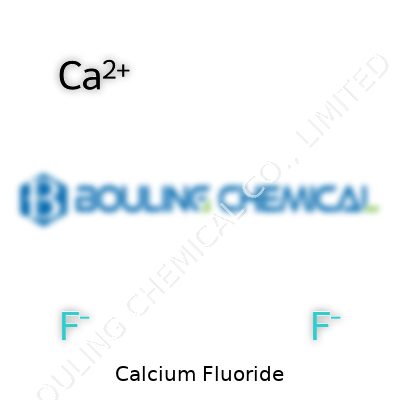
Calcium comes in as a sturdy, metallic element found all over the earth’s crust. Imagine early chemistry classes, dissolving chunks of limestone or chalk and you get a firsthand look at calcium’s versatility. On the other side, fluorine brings a punch of reactivity. It grabs electrons from less assertive elements with ease. Put calcium and fluorine together, and they make a stable ionic compound that stays steadfast under heat and pressure. Ca²⁺ ions line up alongside F⁻ ions in a repeating pattern. Fluorite crystals sparkle with this internal order, and miners often prize those gems for their clarity and glow under ultraviolet light.
The formula CaF₂ goes beyond textbooks. For folks in science labs, it shows up in optical windows, where its high transparency helps bring light-based research and camera tech to new heights. People laugh about old stories mixing fluoride into water or toothpaste, but there’s data behind the method: low concentrations of fluoride, when handled with respect, lock up with minerals in tooth enamel, cutting down the risk of decay. This small chemical detail leads to healthier communities without costly interventions.
Some worry about chemicals with names they can’t pronounce, yet calcium fluoride stands apart from the more notorious fluorine compounds like hydrogen fluoride, which earns its reputation as a hazard. The solid form of CaF₂ remains mostly inert, even when dropped in water. This fact keeps it out of toxicity scare headlines unless someone grinds up tons of the stuff—something not many are doing in their backyard.
Still, the process of extracting fluorite ore for industry draws concern. Open-pit mining changes landscapes and eats into habitats. In places where regulations play catch-up, environmental damage can outpace economic gain. Real solutions require smarter approaches to mining and stricter recycling of industrial byproducts. Technologies using less raw mineral or ways to loop fluorine chemistry back into a “circle of use” promise smaller footprints.
It shouldn’t take a chemistry degree to get why CaF₂ matters. Being able to look at that formula and break it down into calcium and fluorine makes science feel more accessible. Data about fluorite production and fluoride use keeps policymakers and the public on the same page. Building real understanding, not just fear or hype, fits with what top scientists and educators want: clear, factual discussion with stakes that touch real lives. My own curiosity for chemistry started not in classrooms, but in backyard mineral digs and toothpaste tubes—just recognizing a formula or element can start that same spark for someone else.