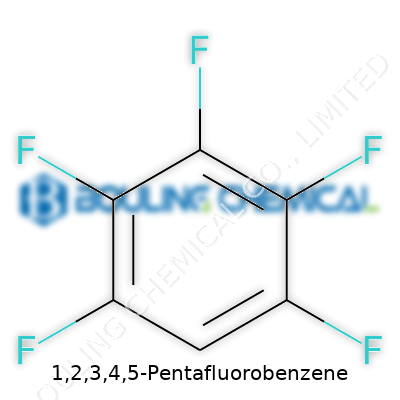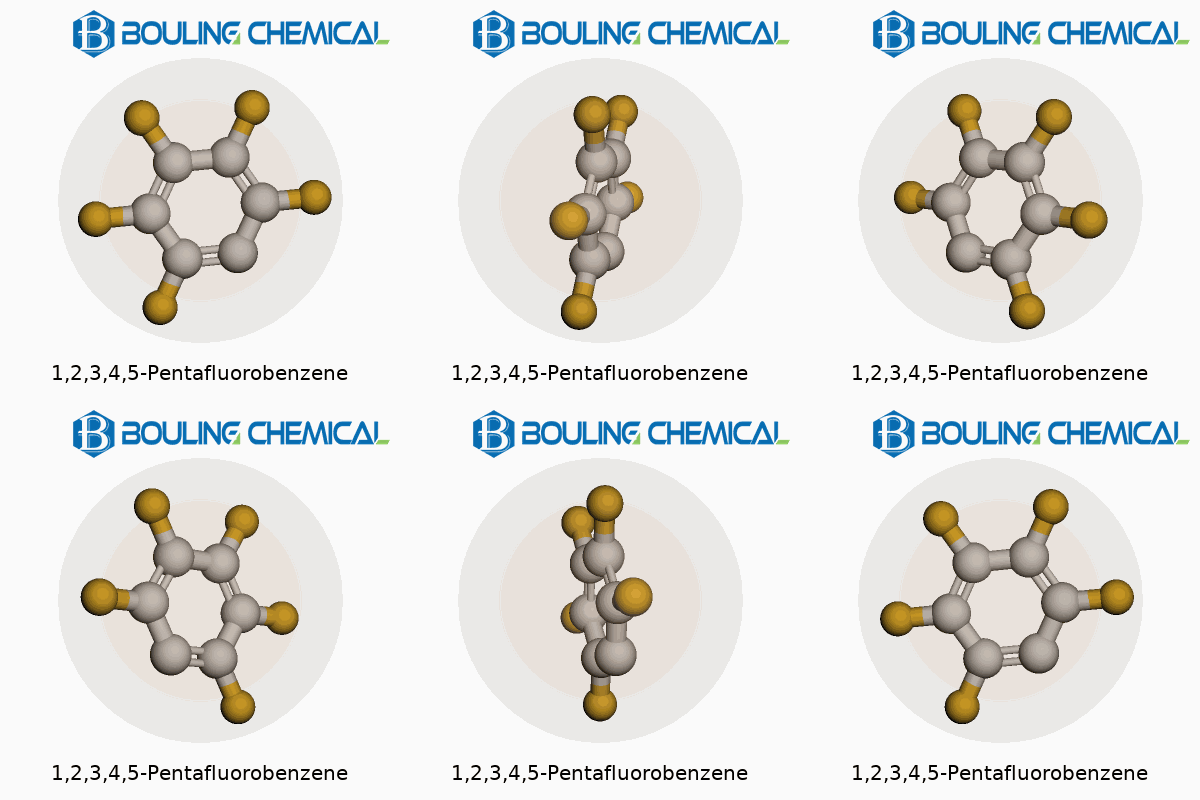
The story of 1,2,3,4,5-pentafluorobenzene connects to a wider journey through the history of organofluorine chemistry. These compounds, packed with fluorine atoms, first grabbed chemists’ attention in the mid-20th century. The unique behavior of fluorine—its strong electronegativity, small atomic radius, and stubborn resistance to metabolic breakdown—prompted a new wave of synthesis. Early efforts focused on simple fluorinated benzenes because of their potential in pharmaceuticals, agrochemicals, and as molecular building blocks. Pentafluorobenzenes, with almost every hydrogen swapped for a fluorine, emerged during this push. Initial methods required harsh chemicals and provided little of the target product. Over time, breakthroughs in selective fluorination, including advancements in transition metal catalysis and halogen exchange, helped refine the process—turning pentafluorobenzenes from lab curiosities into useful, accessible molecules. Looking back, it's clear that perseverance and incremental progress defined the evolution of this compound from niche research to practical science.
1,2,3,4,5-Pentafluorobenzene sits among a family of highly fluorinated aromatic hydrocarbons. This molecule draws interest because of its quirks: aromatic character, substantial electron-withdrawing power, and the tight packing of five fluorine atoms around a benzene ring. Over years spent working in research labs, I've come to appreciate how these properties set the stage for a surprising range of applications. Pentafluorobenzene surfaces as a cutting-edge tool in pharmaceutical innovation, advanced material design, and even as a probe for NMR analysis because of the clear signals those fluorines provide. For chemists, this compound punches above its weight—small, but powerful in impact.
At room temperature, 1,2,3,4,5-pentafluorobenzene typically appears as a colorless liquid. With a melting point below 0°C and boiling point in the neighborhood of 85°C, it’s fairly volatile, so you often pick up a faint, pungent aroma when handling it. The compound resists mixing with water but dissolves well in many common organic solvents. The electron cloud in the aromatic ring draws heavily toward the fluorine atoms, reducing the ring’s reactivity to electrophilic attack while opening up space for nucleophilic aromatic substitution. In practical lab work, the dense ring fluorination alters almost every expected behavior of benzene derivatives: reactivity, stability, even the way the molecule heats up under a lamp. This makes pentafluorobenzene an honest-to-goodness outlier in the typical “benzene derivative” family.
Purity counts for a lot in research and industry, so pentafluorobenzene usually ships labeled at 98% or higher. High-performance liquid chromatography and NMR spectroscopy underpin most quality checks. Natural stability means it handles regular room temperatures for short storage, but the volatility pushes many chemists to keep it chilled, capped, and sealed from light or moisture. The labeling usually reflects its multiple hazards, including clear pictograms for irritant risk. Over a career in lab science, one lesson keeps repeating: treat volatile organofluorines with greater respect than most simple aromatic solvents. Leaks, evaporative loss, or careless spills come back to haunt projects and, on occasion, regulatory audits.
Manufacture of 1,2,3,4,5-pentafluorobenzene rarely follows a single recipe, but halogen exchange stands as the most common route. Chemists often begin with pentachlorobenzene, replacing chlorines for fluorines using potassium fluoride at high temperatures, usually under pressure in polar aprotic solvents such as DMF or DMSO. Other strategies, like direct fluorination with elemental fluorine, exist but tend to risk lower yields and selectivity. Throughout the process, scrubbing systems handle off-gassing while specialized containment cuts down cross-contamination. Yields vary based on conditions and starting material, so most labs fine-tune steps to milligram precision. Reflecting on long syntheses for projects, efficiency comes from constant attention—not just to reaction yields, but to waste management and downstream purification.
The unique electron distribution in 1,2,3,4,5-pentafluorobenzene limits some classic benzene reactions but opens doors for nucleophilic aromatic substitution. The hydrogen atom that remains on the sixth position is more acidic than in regular benzene, giving it special value for building new molecules through deprotonation and further reaction. You can swap fluorines with nucleophiles, or use the ring as a base for constructing more complex systems—key for making novel pharmaceuticals and materials. Over countless synthetic experiments, I've found that choosing the right base, solvent, and reaction temperature spells the difference between a dead end and a breakthrough on the flask scale. Chemists continue finding clever ways to adapt this molecule to more complex transformations, reflecting a real push toward innovation in aromatic chemistry.
Over time, chemists applied a handful of names to this compound. 1,2,3,4,5-Pentafluorobenzene surfaces under names like pentafluorobenzene and benzene, pentafluoro-. In literature, CAS number 363-72-4 often signals its unique identity. Older texts sometimes slot it alongside hexafluorobenzene or note formula differences in shorthand, but the strict five-substitution structure sets it apart. Drawing from a decade spent trawling through patents, journals, and chemical catalogs, clarity in naming staves off mistakes—especially when ordering or referencing substances where one atom’s difference alters both legal status and reactivity.
Working with pentafluorobenzene reminds you chemistry can bite. The volatility and chemical stability make spills and vapors a genuine concern. Gloves and goggles only go so far. Proper fume hoods, air monitoring devices, and strict inventory tracking form part of routine lab life. Material Safety Data Sheets echo similar warnings: potential skin and respiratory irritation, and the need for ventilation. If a spill occurs, solvent-resistant absorbents and trained personnel handle cleanup, never casual lab workers. I remember a laboratory incident where a tiny leak, ignored for hours, led to a tense afternoon of air scrubbing and paperwork. Modern labs do well to remember that thorough training and equipment checks prevent almost all serious mishaps involving organofluorines.
1,2,3,4,5-Pentafluorobenzene rose to prominence because of its range of uses. The pharmaceutical industry leans on its unique reactivity to craft building blocks for agrochemicals, drugs, and imaging agents. Material scientists use it as a monomer or precursor for specialty polymers, aiming to harness its thermal and chemical resistance. Analytical chemists leverage its sharp fluorine NMR spectra as an internal standard. Real-world applications often mirror demands for new drugs, safer pesticides, and better performance coatings. In the field, its unreliable biodegradability prompts researchers to find ways to modify the molecule for both persistence and, sometimes, built-in breakdown. The molecule’s versatility, seen firsthand in university and industry projects, pushes researchers to find still more innovative uses.
Ongoing research on pentafluorobenzene extends beyond synthesis. Scientists look for greener, faster ways to prepare it, aiming to cut hazardous byproducts. In labs I’ve worked, the push for better automation, real-time monitoring, and machine learning-guided optimizations highlights the changing face of R&D. Newer applications keep cropping up: as scaffolds for radiolabeled compounds in PET imaging, as platforms for advanced electronic materials, or even as chemical probes in surface science. Collaboration between academic labs and industry partners speeds this process—what once took years now gets screened, tested, and patented within months. R&D often pivots in response to regulation and market shifts, and the high cost of fluorinated starting materials remains a bottleneck. For all these reasons, investment continues into catalyst discovery, recycling schemes, and eco-friendly processes.
Safety doesn’t stop at the hood. Toxicology for 1,2,3,4,5-pentafluorobenzene still draws from a patchwork of studies. Like many organofluorines, pentafluorobenzene builds up in the body slower than simple hydrocarbons. Lab data suggest potential for eye, skin, and respiratory irritation, with little information about chronic exposure or environmental impact. Some breakdown products pose concerns for groundwater and wildlife. In industry, the relative scarcity of long-term health studies means workers and regulators err on the side of caution. Based on what’s known from perfluorinated analogues, researchers call for more investigation into metabolism and excretion. Even after careful risk assessment, I’ve seen teams pause projects over unresolved safety questions—a clear sign that science needs to double down on characterizing risks as much as reaping rewards.
Fluorinated organics like 1,2,3,4,5-pentafluorobenzene straddle the line between friend and foe. The same qualities that make them game-changers for drug design, electronics, and specialized coatings present real environmental and safety dilemmas. Looking ahead, innovation will likely focus on less toxic synthetic methods, degradable analogues, and finding replacements for applications where environmental concerns outweigh benefits. Demand for more efficient, cost-effective routes shapes current research, as does pressure from tighter regulation and sustainability pledges. Over years spent exploring new molecular solutions, one thing stays clear: progress depends on balancing utility and responsibility, not just in the molecules we create, but in the culture of chemistry itself. Pushing for breakthroughs means not only finding answers, but asking harder questions about where, and how, these compounds fit in the world.
Science can make big headlines, but some real workhorses tend to stay in the background. Take 1,2,3,4,5-pentafluorobenzene. Most people never hear its name, yet this chemical keeps labs moving and ideas growing, especially in research tied to advanced materials and pharmaceuticals.
This compound caught my attention during a stint in graduate research. Researchers often look for stable, manageable molecules with an active edge. Pentafluorobenzene fits the bill. Its five fluorine atoms completely alter the benzene ring, giving chemists an interesting way to create bonds others can’t make as easily. The presence of so many fluorines means it reacts differently compared to regular benzene, which opens up a world of new synthesis possibilities.
One key use comes in making new organic compounds for materials science. Its structure enables more reliable introduction of fluorine into bigger molecules, which changes the physical properties—things like heat stability, resistance to solvents, and even the slick surfaces seen in specialty coatings. Fluorine essentially pulls the molecule in new directions, sometimes making bland plastics into remarkable barrier materials.
It’s not an exaggeration to say every lab focused on making new fluorinated products keeps a bottle of pentafluorobenzene around. By swapping out a fluorine for something else—a process known as substitution—chemists can craft molecules perfectly tuned to block electricity, handle acids, or even fend off bacterial growth. This flexibility feeds everything from new electronics to stronger crop protection chemicals.
In practical terms, chemists use pentafluorobenzene in reactions like Suzuki or Heck coupling. These have a reputation for opening gateways to new drugs and specialized coatings. Modern pharmaceuticals often grab for such powerful building blocks because fluorine atoms can help drugs last longer in the body or reach precise spots in tissue.
Some people think of specialty chemicals as pure science, but I’ve seen the everyday value play out. In manufacturing, companies use pentafluorobenzene to introduce fluorine atoms in stepwise, predictable ways. These steps underlie the creation of polymers that resist wear and tear or microchips that avoid electrical leaks. Fluorinated compounds also lead to efficient agrochemicals and next-generation refrigeration gases.
In a time when every company wants to reduce waste and energy costs, small molecules like pentafluorobenzene pull more than their weight. Efficient reactions mean less unwanted material and energy used. Fluorinated products often outlast their competition, so replacing them less often actually trims industrial footprints.
Despite its utility, the use of fluorinated aromatics demands responsibility. The persistence of fluorine in the environment has sparked concern. Safer disposal methods and recycling routes still pose hurdles. I talk to scientists worried about the legacy these molecules leave behind. A big step forward would involve blending utility with environmental care—developing routes that let us harness these benefits without adding to persistent pollution.
At its best, pentafluorobenzene is a textbook example of quiet chemistry shaping real-world solutions. Paying attention to how it’s made and used will decide whether its promise becomes a net win for both industry and the planet.
Step into any space where chemistry takes the lead—labs, factories, even some specialty shops—and odd-sounding names often spark curiosity. Take 1,2,3,4,5-Pentafluorobenzene. The name might not roll off the tongue, but this organic molecule has its own story, shaped by its structure and the impact of those five fluorine atoms. Its chemical formula, C6HF5, sums up the way this ring compound swaps five hydrogen neighbors for fluorine, giving it properties that sometimes surprise even seasoned chemists.
In the world of aromatic compounds, a simple tweak can send waves through performance, stability, and reactivity. Here, benzene forms the backbone; swap out most of its hydrogens with fluorine, and everything shifts. Pentafluorobenzene doesn’t play by the same rules as plain benzene. With a molecular weight of about 168.06 g/mol, the addition of fluorine heavyweights draws notice. This isn’t just trivia—chemical engineers and researchers look at weight alongside how these molecules interact, dissolve, and behave under different conditions.
Fluorine changes the game for organic molecules. Because it’s more electronegative and creates tight bonds, the properties of pentafluorobenzene stand apart. For me, studying how these molecules react with others gave real insight into why fluorinated benzene rings keep popping up in industries ranging from pharmaceuticals to advanced materials. Sometimes adding fluorine helps in making substances less prone to reacting, more stable in harsh environments, or effective at interrupting biological pathways.
You won’t find pentafluorobenzene in a kitchen cabinet, but its effects travel further than you’d think. People working in chemical synthesis lean on it as a building block. Synthesizing more complex molecules often starts with steps where pentafluorobenzene passes along its unique attributes. In electronics, the stability of those C-F bonds helps materials endure wear and tear, resist corrosion, and deliver reliable results in tough settings.
With fluorinated compounds, questions about health and the environment start to matter. Decades of studying persistent chemicals taught us that fluorine doesn’t just wash away or break down easily. This resistance to decay proves valuable inside a microchip or as a targeted drug, but spells trouble if runoff or waste builds up where it shouldn’t. Researchers now examine lifecycle impacts—from raw materials to final use—asking if benefits outweigh any costs. Regulations shift as new data lands, and innovation increasingly focuses on reusability and safer design.
Anyone using or making pentafluorobenzene gets nudged toward deeper questions: Can alternative molecules do a similar job with less environmental baggage? Will advances in recycling or synthetic biology lower the risk? Sharing reliable data and running open studies give clearer pictures of these risks. It’s hard work, but it makes a difference—avoiding old errors and helping everyone use chemical know-how in smarter, safer ways.
Understanding formulas and weights, like that of C6HF5, opens the door to bigger conversations. Behind every molecule, real decisions shape industries, influence safety, and even affect the places we live. With science that never stands still, every new generation of chemists has the chance to push for better answers, not just for themselves but for everybody relying on what chemistry delivers.
Take a stroll through any modern chemistry lab, and it won't take long before you spot a bottle labeled with complicated names. One that shows up more often than you’d expect is 1,2,3,4,5-pentafluorobenzene. It’s a mouthful, and honestly, not something the average person will come across unless they spend their days among test tubes and solvents.
I've spent years moving through spaces where chemicals stand lined up like books on a shelf. Quite a few have earned their place in the spotlight for being hazardous or outright toxic. So, does 1,2,3,4,5-pentafluorobenzene belong on that list? From digging through published toxicology databases and leafing through material safety data sheets, I get the sense that this compound isn't as famous as benzene or some other well-known solvents when it comes to health scares—but that doesn’t mean it deserves a free pass.
This molecule is basically a benzene ring bolstered by five fluorine atoms. Chemists like its stability. The fluorination makes the ring less reactive toward many common hazards, such as oxidation. That sounds reassuring, but in my experience, “stable” doesn't always mean “safe.”
Pure benzene draws sharp warnings, given its links to blood cancers and other major health hazards. Adding fluorines does change its chemistry, but the benzene backbone still raises eyebrows. Acute exposure information on 1,2,3,4,5-pentafluorobenzene isn't as well-documented as with more notorious chemicals, but there’s reason for caution. Breathing in its vapors, getting it on your skin, or swallowing it accidentally could still bring about nausea, dizziness, or respiratory irritation. Prolonged skin contact has been known to cause dryness or cracking for some related compounds.
The main thing I see missing is a long-term toxicity profile. Regulatory agencies like the EPA and ECHA don’t wave the same red flags for this chemical as they do for others, but they also encourage minimizing unnecessary exposure. That's a standard approach for lab chemicals where specific chronic toxicity data is thin—it’s about minimizing risk because surprises in chemical safety rarely land on the side of harmless.
Fluorinated chemicals have earned global attention in the last decade. Persistent organic pollutants, like some perfluorinated compounds, accumulate in the environment and living organisms. 1,2,3,4,5-pentafluorobenzene isn’t as persistent as the notorious PFAS group, but it’s smart to avoid careless releases. These compounds don’t break down easily. If a spill reaches water or soil, it isn’t going away in a hurry.
Some studies hint that excessive build-up in the environment could interfere with the systems that keep plants or animals healthy. Even though no one has reported gigantic disasters with this particular chemical, growing evidence about fluorinated substances tells me to err on the side of caution.
I’ve always found peace of mind in covering the basics: gloves, goggles, good ventilation, and proper waste protocols. It’s tempting to let your guard down with substances labeled “mild” or “low hazard,” but every working chemist has at least one story where underestimating a compound went wrong. Avoid splashing, never taste or sniff directly, and keep the fume hoods running.
Lab safety training has to keep up with the way new chemicals end up on the bench. While 1,2,3,4,5-pentafluorobenzene doesn’t have a rap sheet as long as some others, that’s no excuse for complacency. Precaution, routine monitoring, and teaching the next generation of scientists to respect what’s in their flasks will go further than waiting for harm to show up in the literature.
Anyone who spends time with fluorinated compounds knows the details make all the difference. In my own experience, something as basic as how a sample sits on the shelf can tip a project into frustration or success. 1,2,3,4,5-Pentafluorobenzene looks simple enough—a clear liquid by eye, a tightly fluorinated ring under the microscope. But like many specialty aromatics, keeping it in top shape isn’t automatic.
Much of the fuss with storing pentafluorobenzene has to do with how easy it is for chemicals to step out of line. It stands as a volatile organic compound—meaning it readily escapes into the air if the cap isn’t tight. That vapor isn’t just a lab odor; in higher concentrations, it turns harmful. No one benefits if that happens, not the researcher, not the facility, and certainly not anyone cleaning up the incident.
Temperature control comes up regularly in lab chats for a reason. Heat speeds up chemical changes, and a rise in temperature gives pentafluorobenzene more chances to leave the bottle. I keep such reagents in cool, well-ventilated areas. Direct sunlight—always a risk on cluttered windowsills or benches—can even shuffle the chemistry inside the flask, so it makes sense to keep it away from light.
Let’s be honest: the most frequent accidents in storage happen when folks forget the basics. A clear label, a tight-fitting lid, and a stable shelf make all the difference. In my own lab, nobody ever gets in trouble for double-checking a bottle. Open flames and static spark risk near aromatic solvents still get daily reminders. Most organic chemicals, especially those with multiple fluorines, can react with strong bases or oxidizers—the last thing you want is cross-contamination.
Handling pentafluorobenzene means thinking about air and moisture. Many aromatic compounds stay stable if kept dry, but exposure to humidity sometimes leads to subtle decomposition, even before anything obvious shows up. We’ve seen labels fade or seals swell from vapor loss, especially in poorly maintained secondary containers.
Best practice in my lab: keep any sensitive reagent in a tightly sealed amber vial, stored inside a desiccator or a purpose-built chemical cabinet. Even if guidance doesn’t insist on low-humidity storage for pentafluorobenzene, I’ve found that erring on the side of caution saves money, time, and nerves.
Strict storage rules often feel annoying, but the science backs it up. The CDC and National Institutes for Occupational Safety and Health highlight how solvent exposure relates to long-term health problems. Research in chemical safety stresses reducing accidental inhalation, keeping exposure below recommended limits, and isolating volatile liquids from incompatible materials.
Nobody wants to redo a synthesis because a bottle went bad after sitting under harsh lights. By planning for every scenario—using proper ventilation, stable shelving, and reducing heat—you get more life from your stock, safer air, and fewer headaches from failed reactions or unexpected spills. Laboratory work is challenging enough without sloppy storage turning a useful solvent into a hazard.
Safe handling and disposal of chemicals like 1,2,3,4,5-pentafluorobenzene tend to fade into the background for most folks who aren’t working in the lab every day. That convenience hides a risk. Over time, even a minor spill or careless disposal method can create hefty problems, not just for those in the room but also for people relying on uncontaminated water, healthy soils, and clean air. Anyone who’s worked around this compound knows the sharp, harsh smell and the nagging sense that it doesn’t take much for a routine task to turn ugly.
My time in academic and industrial labs drilled into me the importance of personal protective equipment—gloves, goggles, and lab coats won’t win any style awards, but they’ve stopped acid burns, headaches, and worse. With pentafluorobenzene, that discipline matters even more. It can irritate the skin, eyes, and lungs. Splash-proof goggles and chemical-resistant gloves go on before touching the bottle.
I always lean on good ventilation. Fume hoods do the heavy lifting by keeping noxious vapors out of breathing range. Pipetting or transferring material in the open—no matter how careful—can’t match the airflow and filtration offered by a well-maintained hood. To those new to working with volatile or halogenated aromatics, that first whiff outside the hood should be the last.
Spills happen. Keeping an emergency kit with absorbent pads and neutralizing agents at arm’s reach lowers the panic if something goes sideways. Cleaning up on the spot, instead of waiting until after a task finishes, nips bigger problems early. If a spill covers clothing, don’t try to “just brush it off.” Contaminated labwear goes in labeled, sealed bags for proper cleaning or incineration.
Disposal scares people because mistakes don’t show right away. Pouring leftover pentafluorobenzene or its wash solutions into a sink or flushing them down a drain is more than a shortcut—it’s dumping future health headaches onto others. Municipal water treatment can’t neutralize or break down many fluorinated compounds, which stick around longer than people realize.
Every lab I’ve spent time in kept a dedicated halogenated solvent waste container. Tight-fitting lids, clear labeling, and spending a little extra time walking waste across campus or to an industrial collection point keeps something hazardous from creeping into public spaces. Reputable hazardous waste contractors pick up these kinds of solvents and handle them in incinerators designed to trap toxic byproducts and keep air emissions in check.
For those outside formal labs—schools, hobbyists, and small shops—local household hazardous waste programs exist for a reason. The staff usually welcomes questions and will explain what happens to each container. Safely transporting residues in sealed, clearly marked bottles shows respect for their expertise, and, frankly, for everyone downstream of that waste.
One thing I’ve learned: taking short cuts with hazardous chemicals saves no one time in the long run. Practicing robust handling and disposal methods keeps people and environments safer. It shows the respect professional science owes to the communities supporting it, as well as to the future generations who will live with the consequences of what we pour out today. Following established protocols and treating each step of the process with care protects the things worth keeping clean—our health and the places we call home.